Wildlife Photographer of the Year at the Natural History Museum
Wildlife Photographer of the Year 2025 is the Natural History Museum’s flagship annual exhibition showcasing 100 award-winning images selected from over 60,000 global entries, celebrating the beauty, drama, and urgency of the natural world. It runs at the Museum in London with timed tickets and high demand on weekends.
Exhibition at a Glance
- What: Wildlife Photographer of the Year 2025
- Where: Natural History Museum, London
- When: 17 October 2025 – 12 July 2026
- Why Go: World-class nature storytelling
- Tickets: From £18 adults; off-peak from £15.50. Book online in advance.
For a deeper understanding of the Museum’s broader collections and context around wildlife, consider a Natural History Museum Private Tour with our expert guides (please note: private tours do not include exhibition entry).
About the Exhibition: Wildlife Photographer of the Year 2025
Now in its sixty-first year, Wildlife Photographer of the Year (WPY) is the Natural History Museum’s global platform for the best nature photography, presenting compelling stories of species, habitats, and human impact. The 2025 edition features 100 images chosen anonymously for originality, technical excellence and creativity, distilled from a record-breaking 60,636 entries from 113 countries and territories.
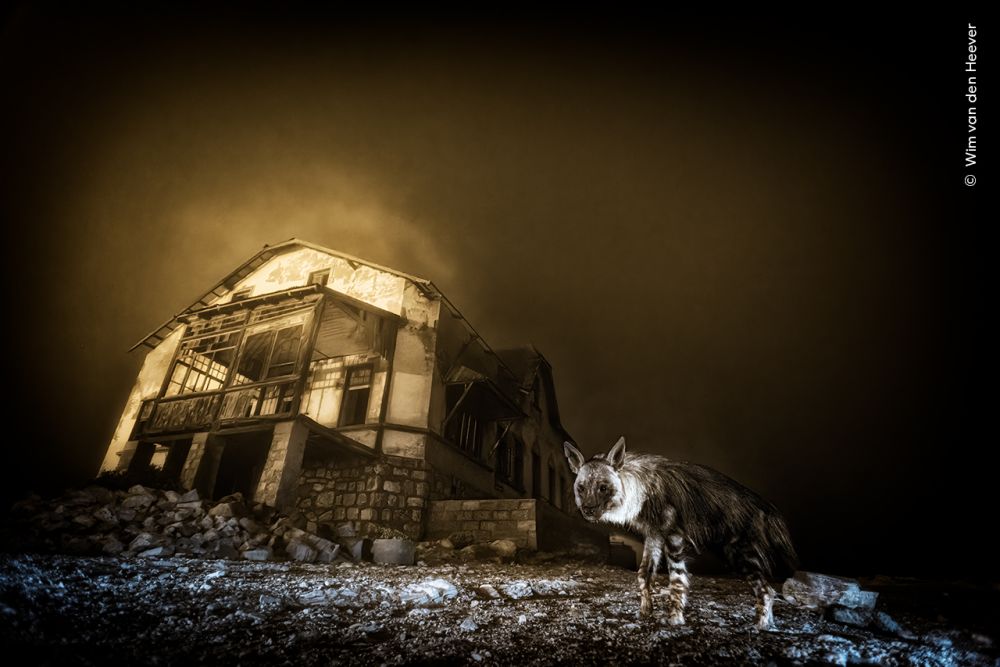
The overall winner is South African photographer Wim van den Heever for Ghost Town Visitor, a haunting camera-trap portrait of a rare brown hyena exploring the skeletal remains of a long-abandoned diamond-mining town at Kolmanskop, Namibia. The image underscores nature’s quiet resilience as wildlife reclaims human places.
The exhibition runs at the Natural History Museum, London, from Friday 17 October 2025 to Sunday 12 July 2026, with morning and afternoon slots that can sell out—especially on weekends. Standard hours are 10.00–17.50 (last entry 16.30).
Alongside breathtaking images, WPY 2025 deepens the conversation on biodiversity by introducing the Museum’s Biodiversity Intactness Index, a groundbreaking metric that helps track and communicate changes in nature at a global scale—now adopted as an official Global Biodiversity Framework indicator.
Learn more and check live availability via the official exhibition page: Wildlife Photographer of the Year at the NHM.
Artists and Must-See Works
WPY is a curated journey through 19 categories spanning animal behaviour, urban wildlife, photojournalism, oceans, plants and fungi, and more. Below are highlights that capture the breadth of this year’s stories and styles.
- Overall Winner: Ghost Town Visitor by Wim van den Heever (brown hyena in Namibia’s Kolmanskop) — an unforgettable urban-wild interface.
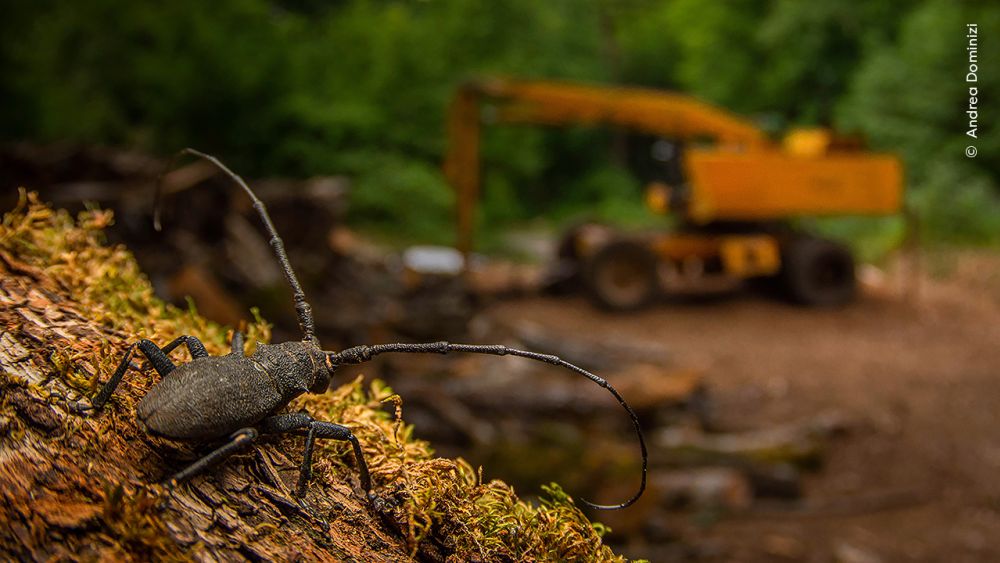
- Young Wildlife Photographer of the Year: After the Destruction by Andrea Dominizi (longhorn beetle amid abandoned machinery in Italy), a poignant micro-story of habitat loss.
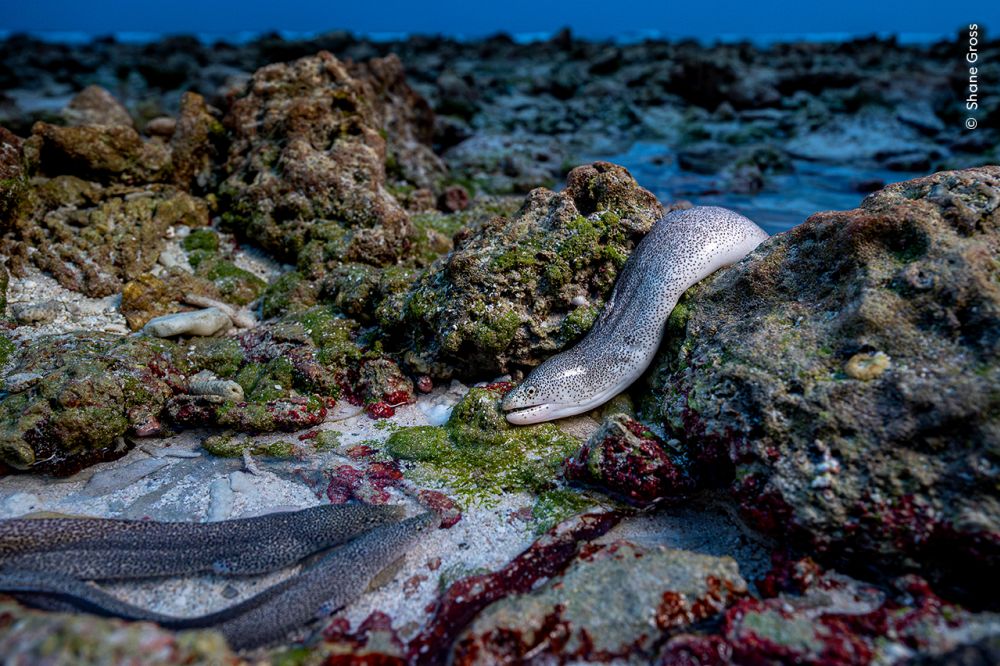
- Animals in Their Environment: Like an Eel out of Water by Shane Gross — peppered morays scavenging at low tide, captured after weeks of patient observation.
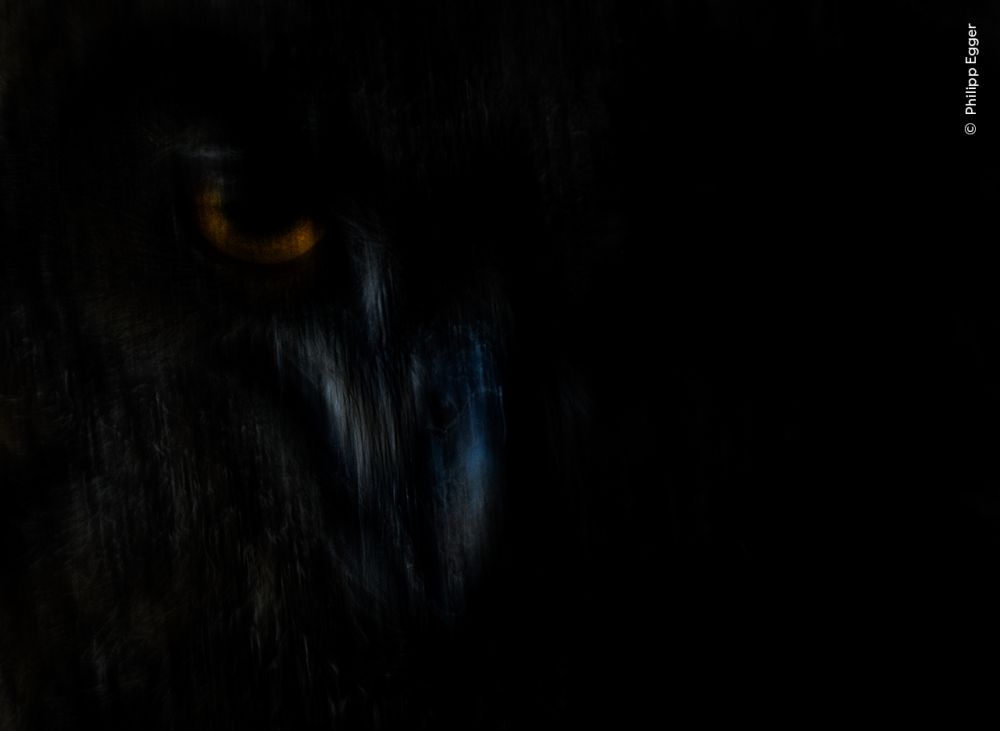
- Animal Portraits: Shadow Hunter by Philipp Egger — the ember-glow gaze of an eagle owl, planned with meticulous technique.
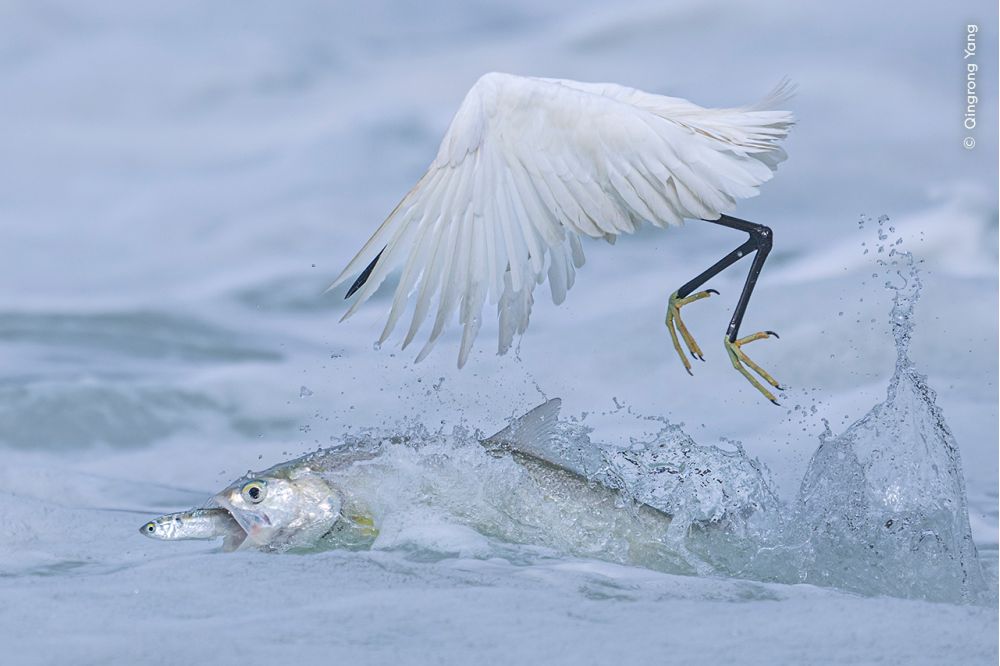
- Behaviour (Birds): Synchronised Fishing by Qingrong Yang — a razor-timed moment as a ladyfish snatches prey beneath a little egret’s beak.
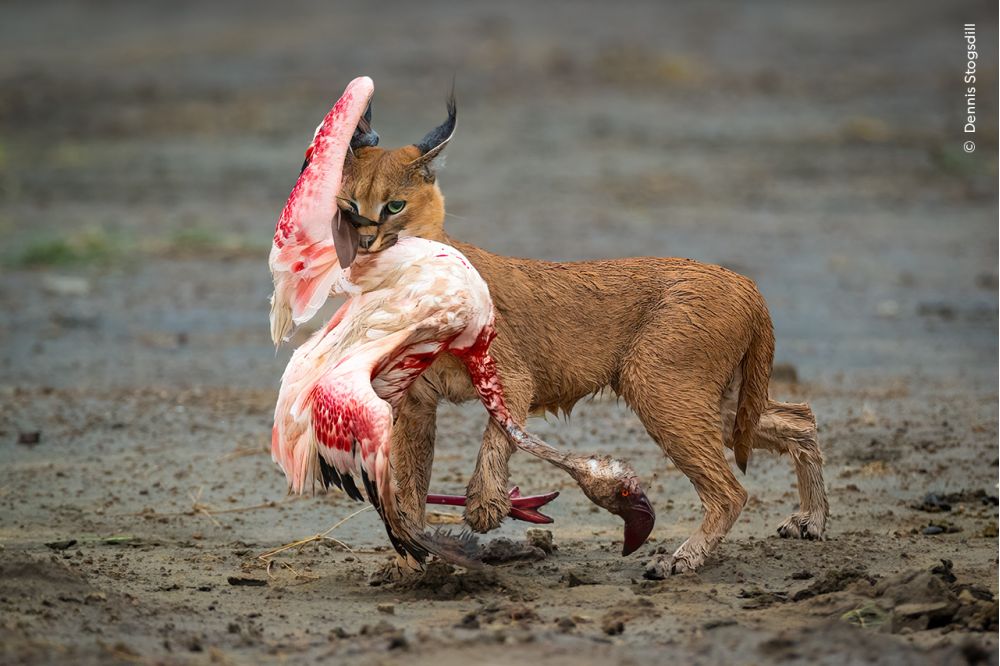
- Behaviour (Mammals): Cat Amongst the Flamingos by Dennis Stogsdill — a caracal’s acrobatic hunt in Tanzania’s Ndutu Lake.
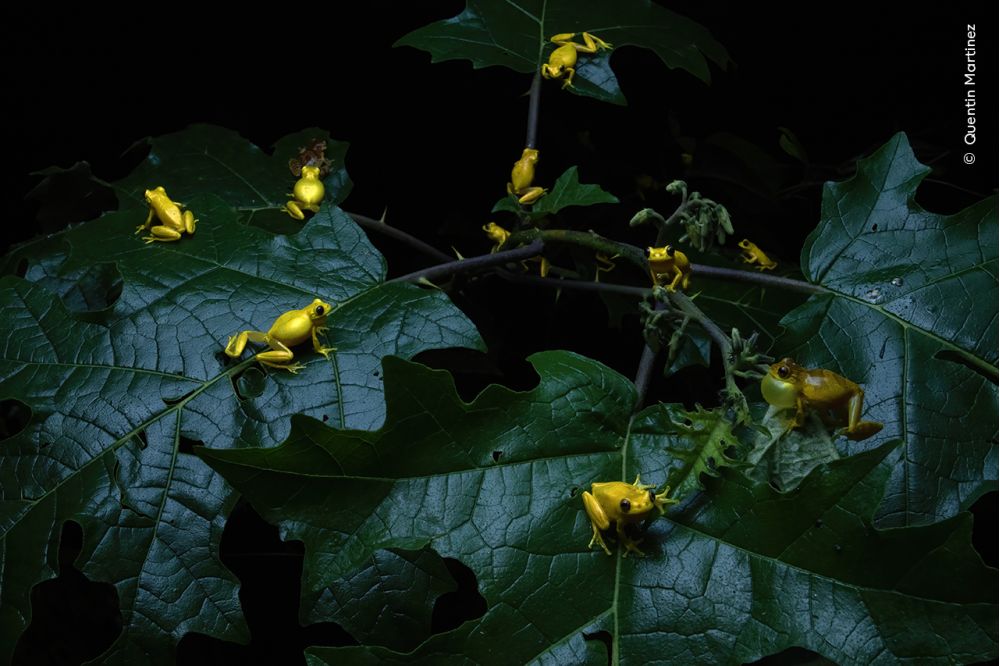
- Behaviour (Amphibians & Reptiles): Frolicking Frogs by Quentin Martinez — a rain-triggered breeding spectacle of lesser tree frogs.
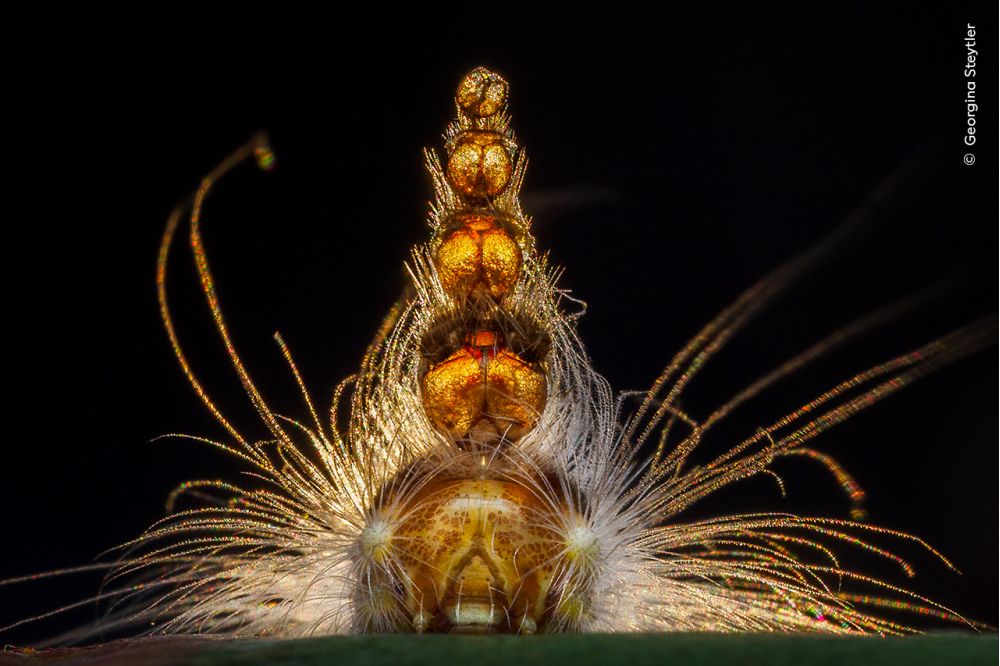
- Behaviour (Invertebrates): Mad Hatterpillar by Georgina Steytler — a gum-leaf skeletoniser caterpillar wearing a tower of retained head capsules.
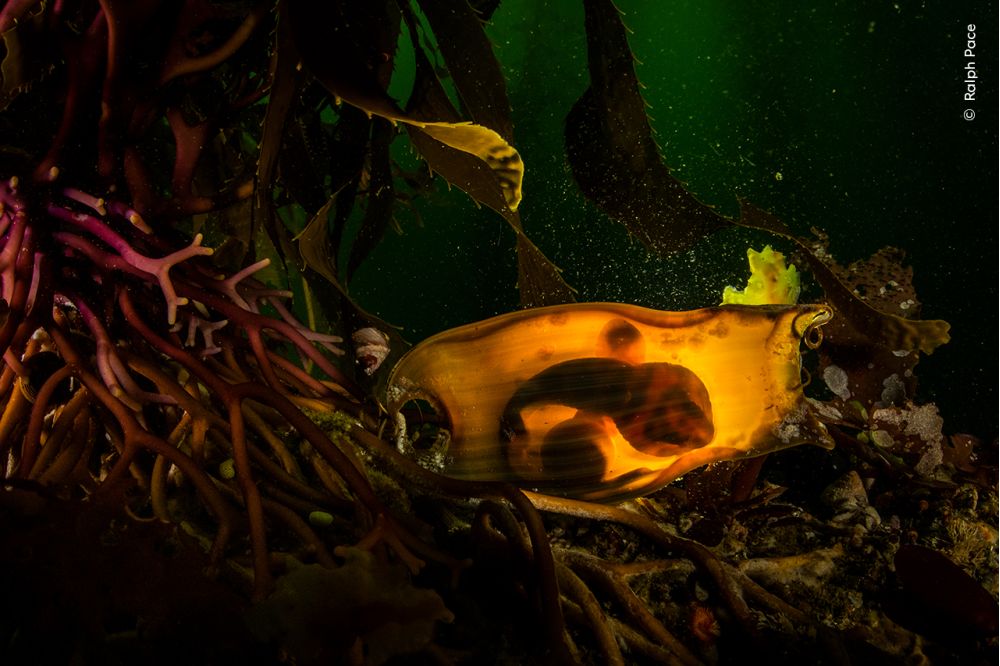
- Underwater: Survival Purse by Ralph Pace — a back-lit swell shark embryo in its “mermaid’s purse” among Monterey’s kelp.
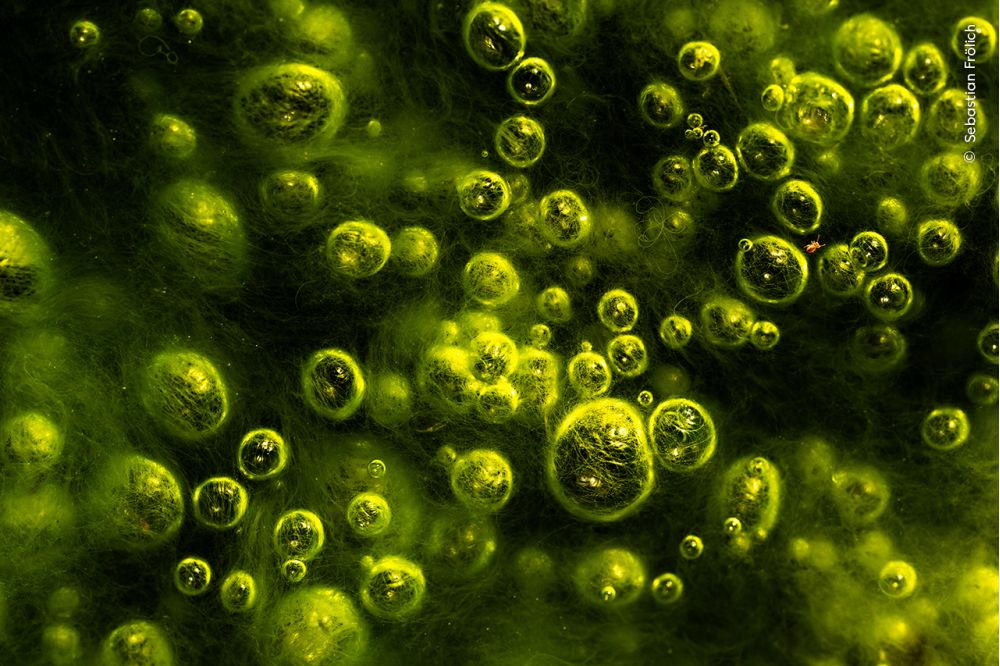
- Wetlands: The Bigger Picture: Vanishing Pond by Sebastian Frölich — a tiny springtail races over neon green gas bubbles in an Austrian peat bog.
After the Destruction - Andrea Dominizi (Italy) — Young Wildlife Photographer of the Year 2025
Like an Eel out of Water - Shane Gross (Canada) — Animals in Their Environment
Shadow Hunter - Philipp Egger (Italy) — Animal Portraits
Synchronised Fishing - Qingrong Yang (China) — Behaviour: Birds
Cat Amongst the Flamingos - Dennis Stogsdill (USA) — Behaviour: Mammals
Frolicking Frogs - Quentin Martinez (France) — Behaviour: Amphibians & Reptiles
Mad Hatterpillar - Georgina Steytler (Australia) — Behaviour: Invertebrates
Survival Purse - Ralph Pace (USA) — Underwater
Vanishing Pond - Sebastian Frölich (Germany) — Wetlands: The Bigger Picture
Make the most of your day at the NHM
Struggling to fit WPY into a packed London itinerary? Our Natural History Museum Private Tour streamlines your visit to the permanent collections, so you can book a timed WPY ticket that suits you. Note: tour price does not include WPY exhibition entry; please book the exhibition separately.
Why Visit Wildlife Photographer of the Year 2025?
- Unrivalled storytelling: 100 images curated by an international jury for artistry, originality, and impact.
- Global perspective: Category winners span oceans, wetlands, urban wildlife, behaviour, plants and fungi, and more.
- Science meets art: The Biodiversity Intactness Index adds context to the habitats you’ll see, turning inspiration into understanding.
- Young voices: The Young WPY award celebrates emerging talent and the future of conservation storytelling.
About the Competition
Wildlife Photographer of the Year is an annual competition run by the Natural History Museum, London, open to photographers of all ages, nationalities, and experience levels. Each year, a panel of experts from wildlife photography, filmmaking, conservation and science judges entries anonymously across adult and youth categories. In 2025, organisers received 60,636 entries from 113 countries and territories.
WPY celebrates both artistry and ethics, highlighting behaviours, habitats and human-wildlife relationships — from hopeful conservation stories to urgent challenges. The exhibition then tours the UK and internationally, inspiring millions to appreciate and protect the natural world.
Beyond the overall and young winners, notable 2025 recognitions include the Impact Award for Fernando Faciole’s Orphan of the Road, spotlighting road collisions’ toll on Brazil’s giant anteaters and measures such as fencing and underpasses to reduce mortality.
Interested in entering next time? The 62nd WPY competition opens in October 2025 with different entry pathways for adults and young people; always check the official NHM site for categories, fees or free-entry regions and deadlines.
Practical Information (Checklist)
- Dates: 17 Oct 2025 – 12 Jul 2026.
- Opening Hours: Daily 10.00–17.50 (last entry 16.30).
- Location: Natural History Museum, South Kensington, London.
- Tickets: Adult from £18.00; concessions from £14.40; child from £9.00; off-peak from £15.50 (adult). Book in advance.
- How to Get There: South Kensington (Underground); multiple bus routes; allow time for security and wayfinding.
FAQs about Wildlife Photographer of the Year 2025
- What is Wildlife Photographer of the Year?
- It’s the Natural History Museum’s annual global photography competition and exhibition, showcasing the year’s most original, technically excellent and creative nature images.
- When does the 2025 exhibition run?
- From 17 October 2025 to 12 July 2026 at the Natural History Museum, London.
- How much time should I allow?
- Most visitors spend 60–90 minutes inside the exhibition; allow extra time for the Museum’s permanent galleries and amenities.
- Do I need to book in advance?
- Yes. Timed tickets are popular and weekends sell out quickly—book early via the official NHM page.
- How much are tickets?
- Adult from £18.00; concessions from £14.40; child from £9.00. Off-peak pricing starts at £15.50 for adults (prices exclude optional Gift Aid).
- Is photography allowed inside the exhibition?
- Non-flash photography is typically permitted for personal use unless signage states otherwise; check on the day.
- Who won the top awards in 2025?
- Overall Winner: Wim van den Heever for Ghost Town Visitor (brown hyena, Namibia). Young WPY: Andrea Dominizi for After the Destruction (longhorn beetle, Italy).
- What’s new this year?
- The exhibition introduces the Museum’s Biodiversity Intactness Index, providing scientific context to the habitats featured.
- Is the competition open to amateurs or only professionals?
- WPY is open to photographers of all ages, nationalities and experience levels, with adult and youth divisions and multiple categories.
- Does your private tour include entry to WPY?
- No. Our Natural History Museum Private Tour covers the permanent galleries. Please book WPY timed tickets separately via the NHM site.
- Where can I read more or buy tickets?
- See the official exhibition page (trackable link): NHM | Wildlife Photographer of the Year.
Conclusion
From the spectral presence of a brown hyena in a Namibian ghost town to microscopic worlds on alpine peat bogs, WPY 2025 invites you to look closer and think bigger. Book your slot, plan time for the Museum’s permanent treasures, and let the world’s most compelling nature images reshape the way you see our planet.
This article was curated by the London Museum Tours team. With years of experience guiding visitors through London's permanent collections and temporary exhibitions, our goal is to help you plan the perfect visit.