Henry Moore: Monumental Nature – London Exhibition 2026
What is the Henry Moore: Monumental Nature exhibition?
Henry Moore: Monumental Nature is a major outdoor and gallery exhibition at Kew Gardens, London, bringing Moore’s monumental sculptures into dialogue with trees, glasshouses and historic landscapes. Running from 9 May 2026 to 31 January 2027, it is included with entry to Kew Gardens.
Exhibition at a Glance
- What: Henry Moore: Monumental Nature
- Where: Kew Gardens, London
- When: 9 May 2026 – 31 January 2027
- Why Go: Moore’s sculpture in a living landscape
- Tickets: Included with Kew Gardens entry. Book online in advance.
About the Exhibition: Henry Moore: Monumental Nature
At Kew Gardens, sculpture is never simply placed outdoors. It enters a landscape already shaped by centuries of collecting, planting, science and display. That is what makes Henry Moore: Monumental Nature more than a large open-air exhibition: it is a rare opportunity to see one of Britain’s most important modern sculptors in the kind of setting he believed sculpture needed.
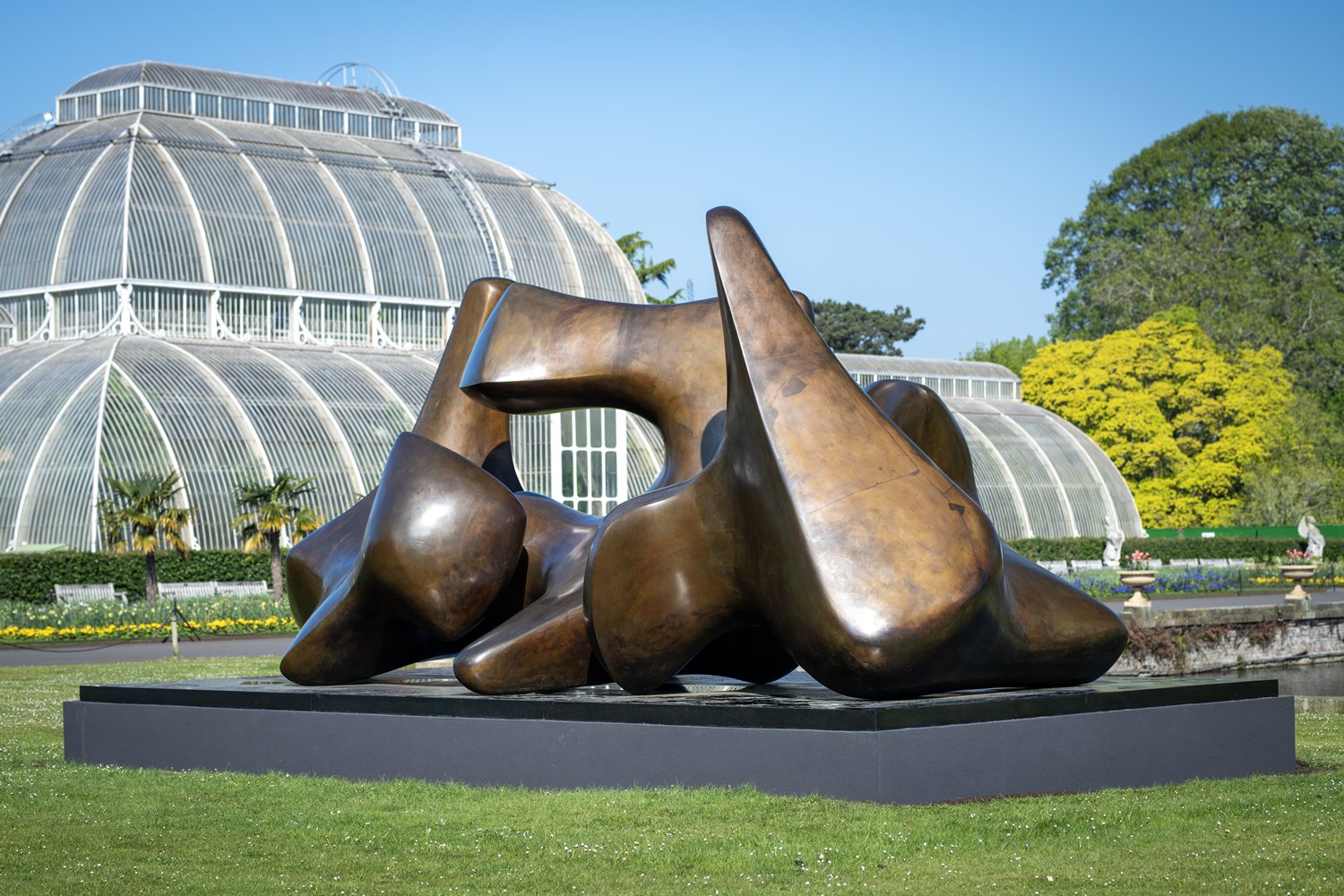
The exhibition brings together 30 monumental sculptures across Kew’s 320-acre UNESCO World Heritage landscape, with works positioned among historic vistas, mature trees and the great Victorian glasshouses. Inside the Shirley Sherwood Gallery of Botanical Art, visitors can also discover more than 90 smaller works, including bronzes, carvings, drawings, models and sketchbooks. The result is a visit that moves between scale and intimacy: from the shadow of bronze on grass to the smaller evidence of Moore thinking with his hands.
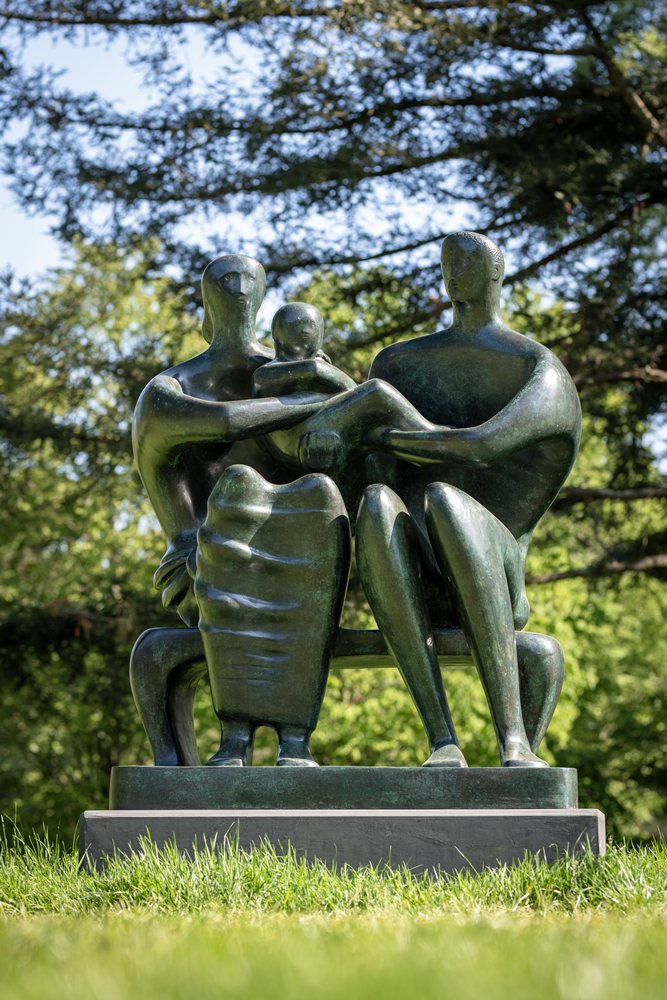
Moore’s relationship with nature was not decorative. Bones, stones, shells, wood, trees and weathered forms fed his imagination throughout his career. His sculptures often feel as if they have grown rather than been made: heavy, hollowed, balanced, pierced, sometimes almost geological. Kew gives those qualities room to breathe. A bronze curve set against leaves behaves differently from the same curve inside a white-walled gallery; the surface catches rain, sun and shade, and the sculpture changes as the visitor walks around it.
This is also part of Kew’s wider tradition of bringing contemporary and modern art into the Gardens. For visitors planning cultural time in the city, it offers a different kind of London museum experience: less about moving from room to room, more about walking, pausing and letting art and landscape meet slowly. You can find more ideas for cultural visits in our guide to Exhibitions in London.
Artists and Must-See Works
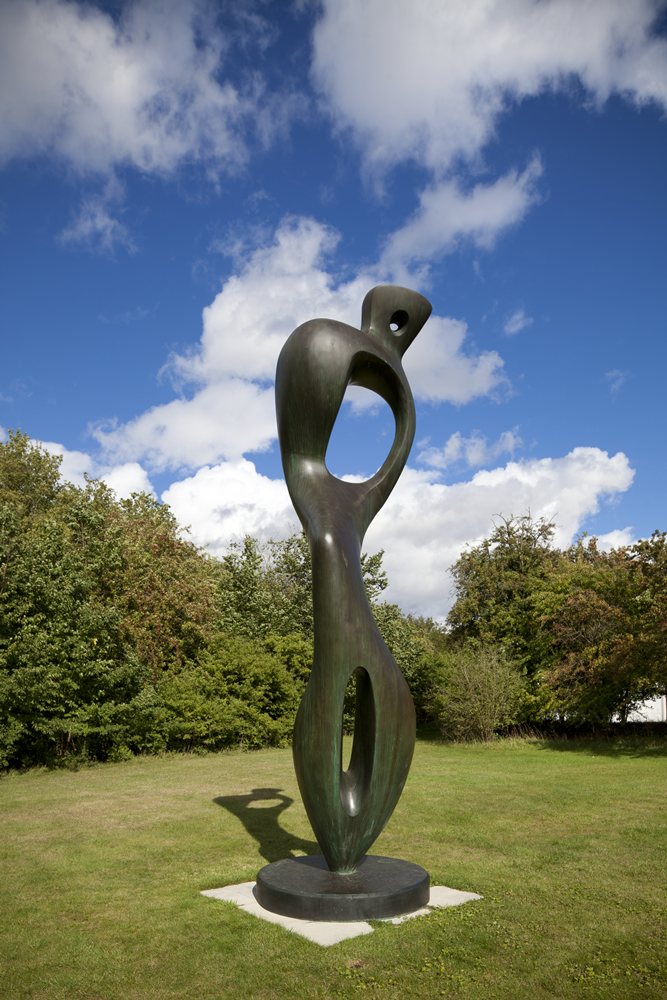
The first thing to understand about Henry Moore at Kew is scale. Moore’s large sculptures were made to be approached from several directions, not consumed in a single glance. Their meaning often sits in the spaces between forms: the gap, the hollow, the line of sky visible through bronze. At Kew, those openings become especially powerful because they frame trees, glasshouses and moving clouds.
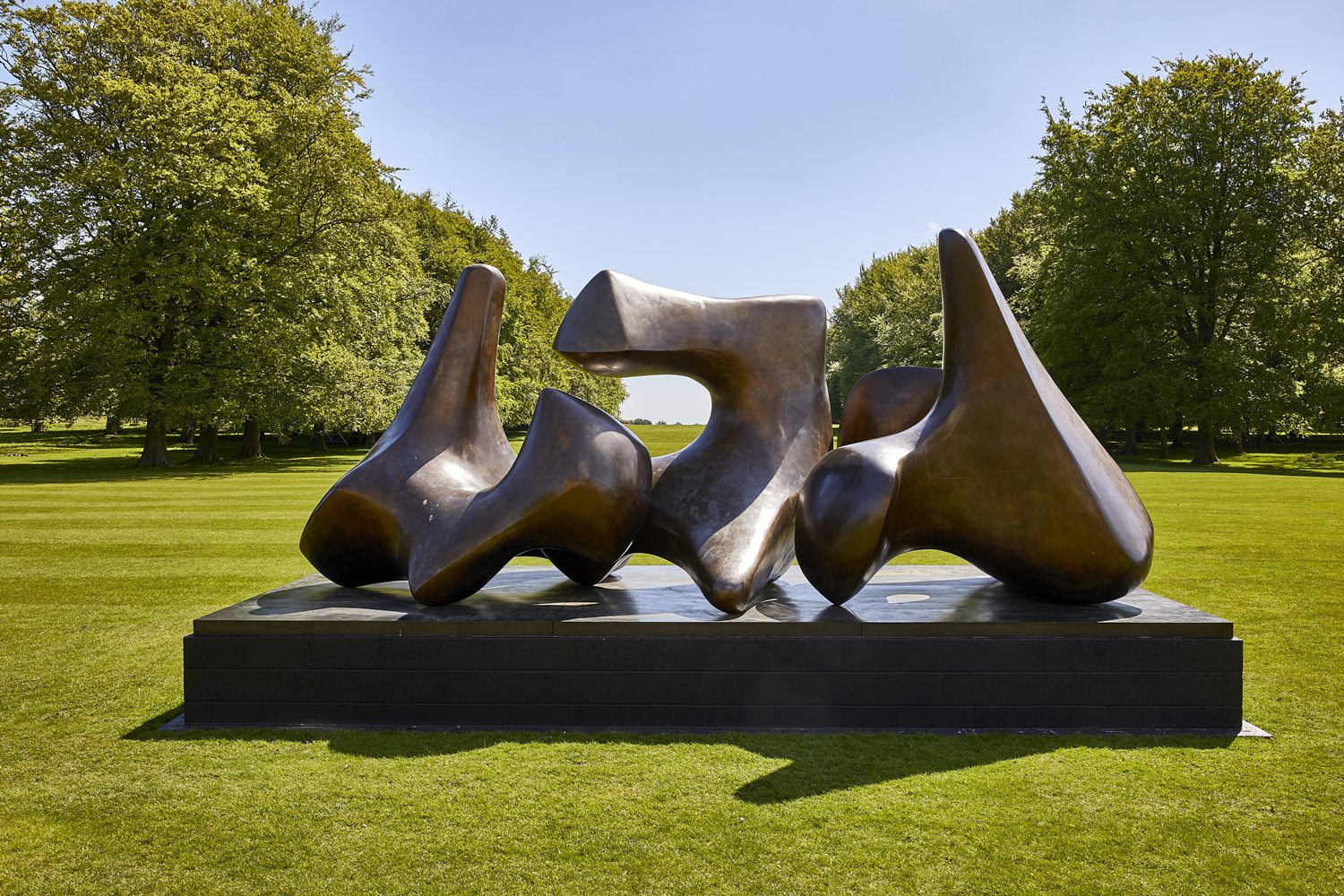
Henry Moore is often associated with reclining figures, and for good reason. The reclining body gave him a lifelong structure through which to explore weight, landscape and abstraction. In works such as Large Reclining Figure and Reclining Woman: Elbow, the human body is no longer a portrait of one person. It becomes a terrain: shoulder, torso, knee and elbow turning into ridges, arches and resting masses. At Kew, these figures can be read almost like hills in miniature, their bronze surfaces answering the lawns and planted borders around them.
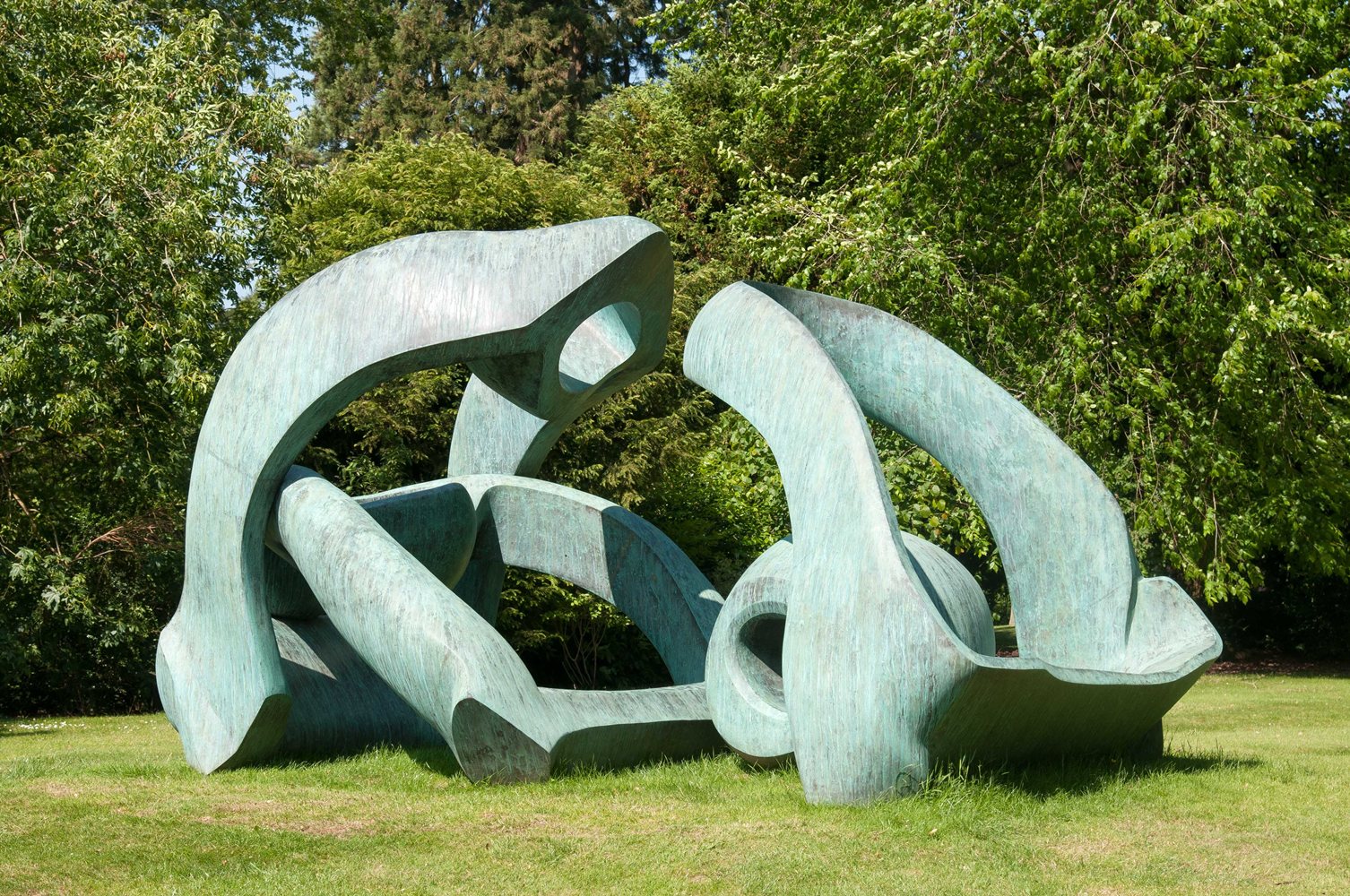
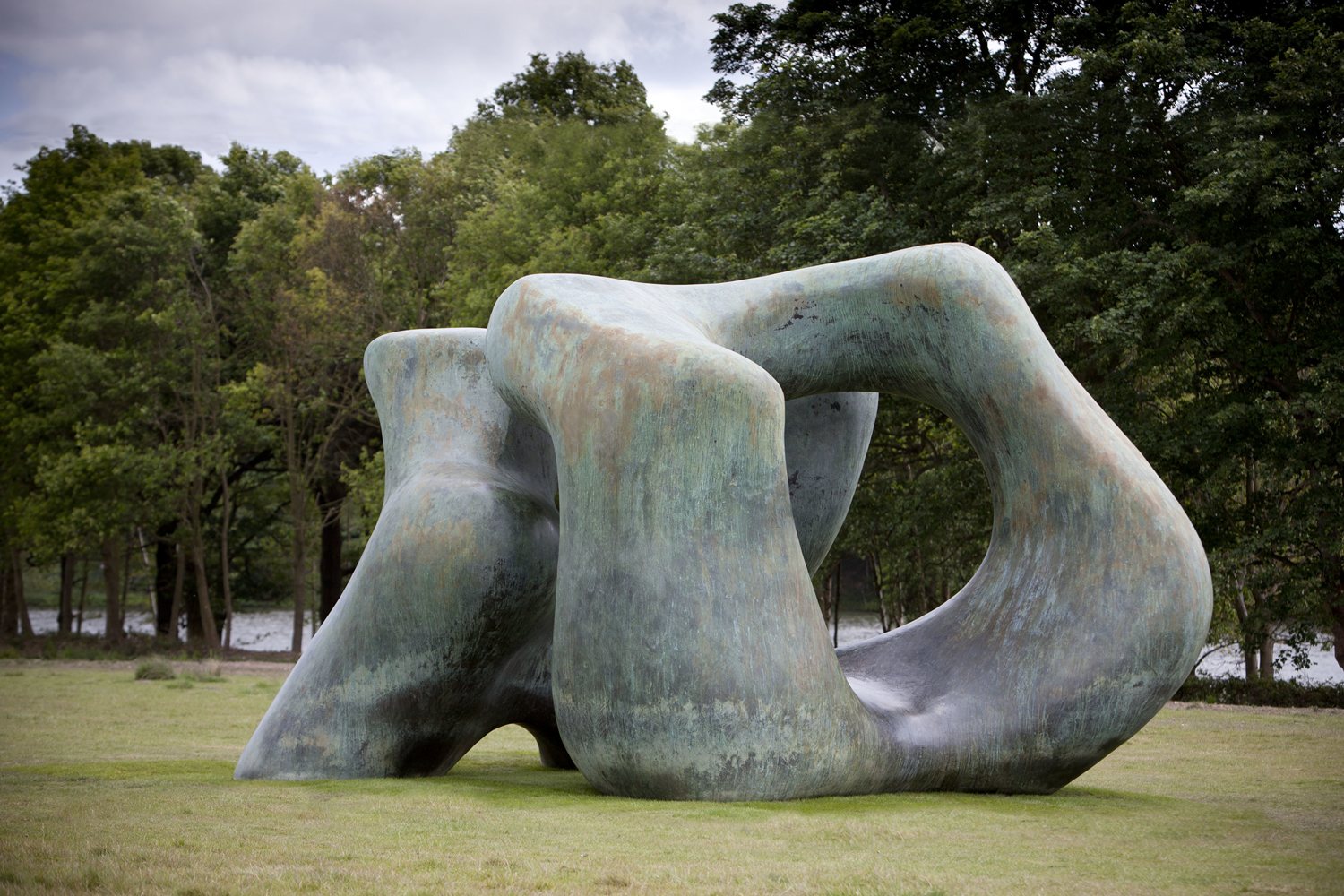
Large Two Forms is one of the works that most clearly shows Moore’s ability to create drama without narrative. Two great masses face or lean towards one another, not quite separate and not quite joined. The tension is physical: you sense the pull between them before you try to explain it. In a garden setting, that relationship becomes less theatrical and more organic, like two stones shaped by pressure, weather and time.
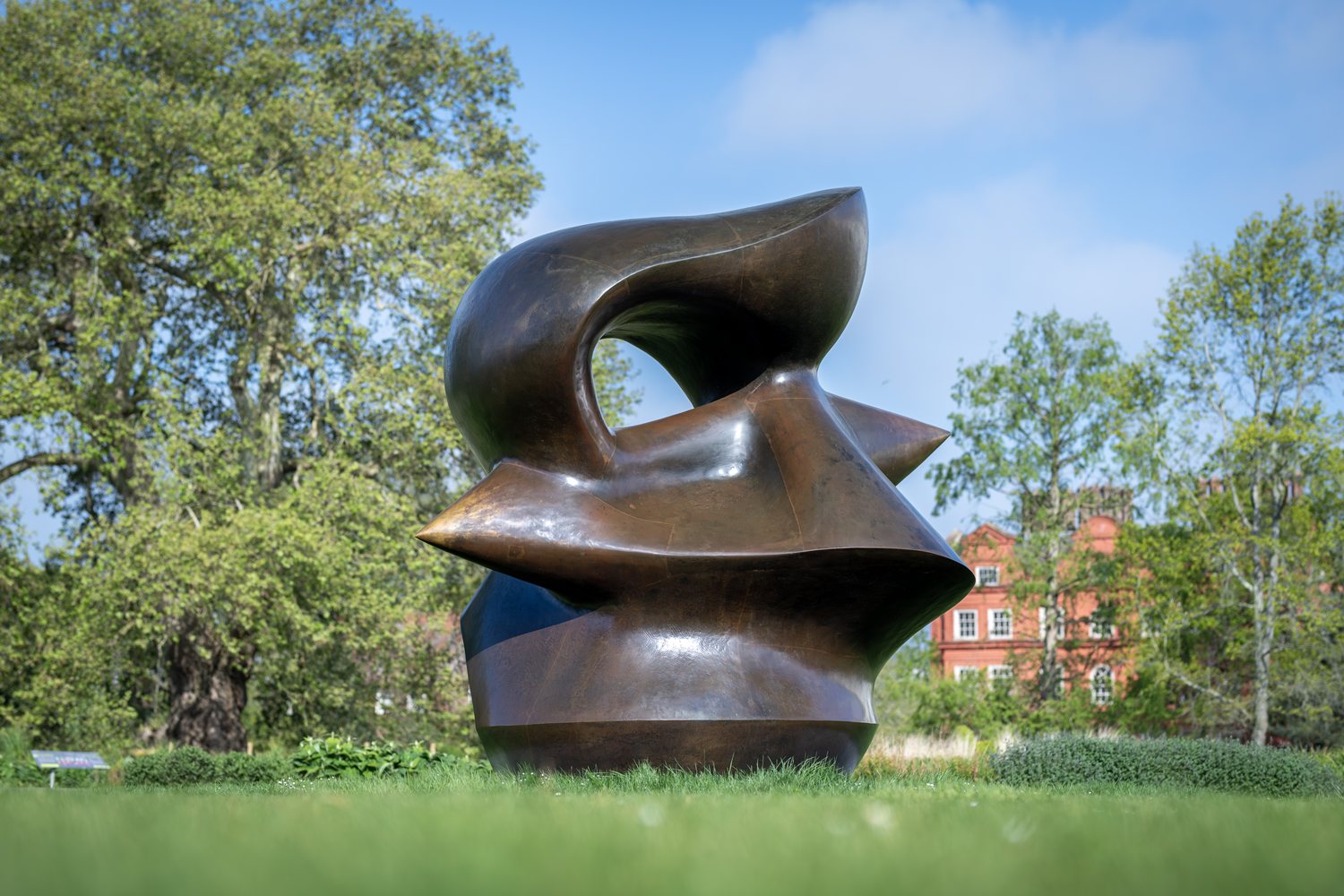
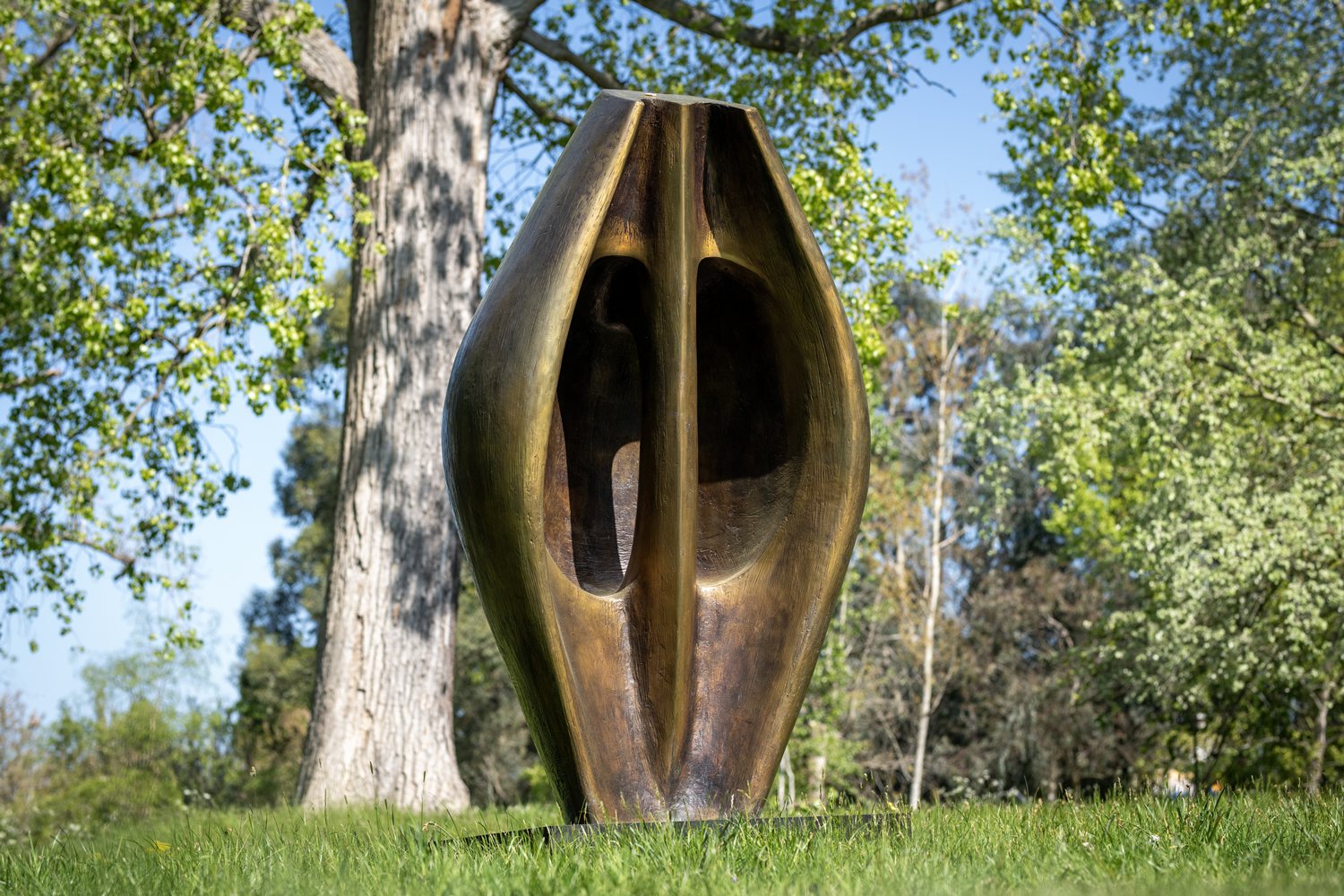
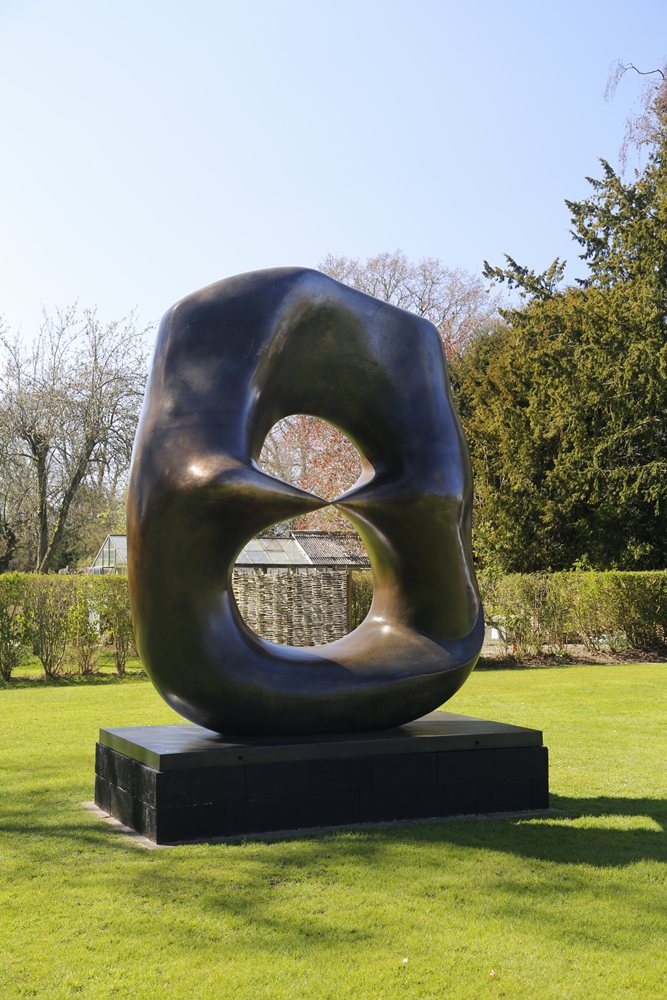
Oval with Points is a work to spend time with rather than pass quickly. Its rounded form is pierced by a central void, while two points stretch inward towards each other without touching. That almost-meeting creates the sculpture’s charge. The most rewarding view is not necessarily the front view; walk around it and the opening begins to act like a lens, cutting fragments of Kew’s landscape into the sculpture itself.
Sheep Piece brings Moore close to the rural world around his home and studios in Hertfordshire. Moore lived and worked at Perry Green for much of his life, and the presence of animals, fields and changing seasons was part of his daily visual world. The title may suggest pastoral charm, but the sculpture itself is not sentimental. Its forms are dense, sheltering and compact, more about mass and protection than illustration.
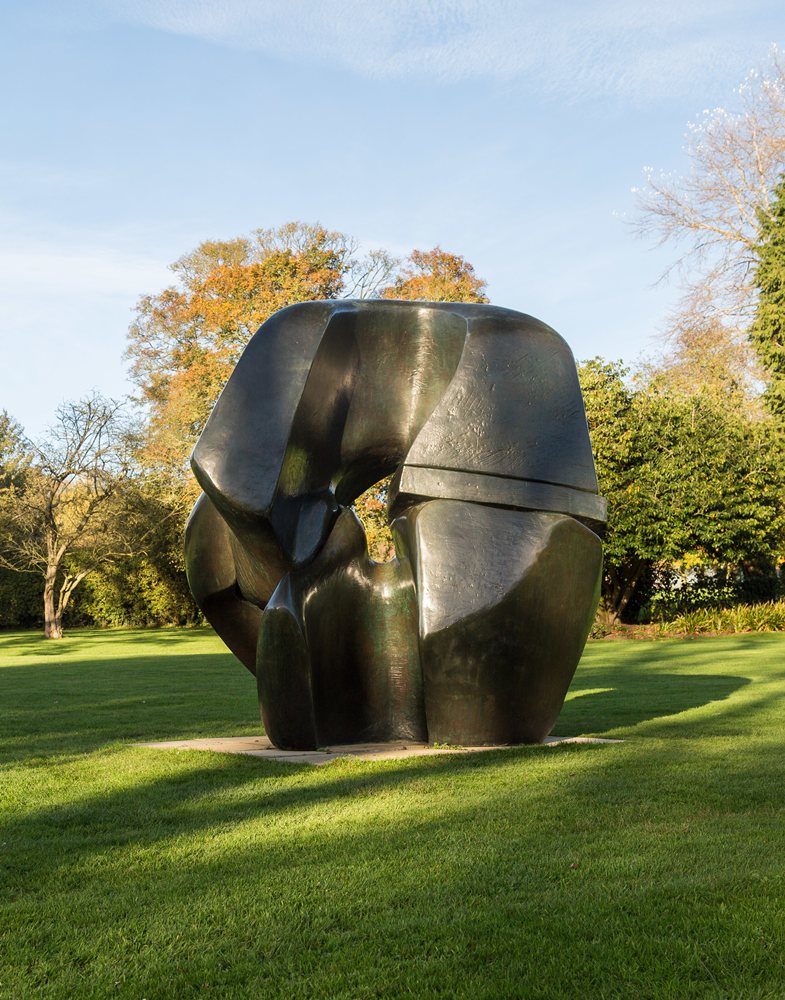
Locking Piece belongs to a different family of Moore’s forms: interlocking, mechanical, almost puzzle-like, yet still rooted in organic suggestion. It is worth looking for the way one form grips or presses against another. Moore’s best sculptures rarely explain themselves immediately; they ask you to test them with your eyes, to imagine how one volume might move, resist or hold.
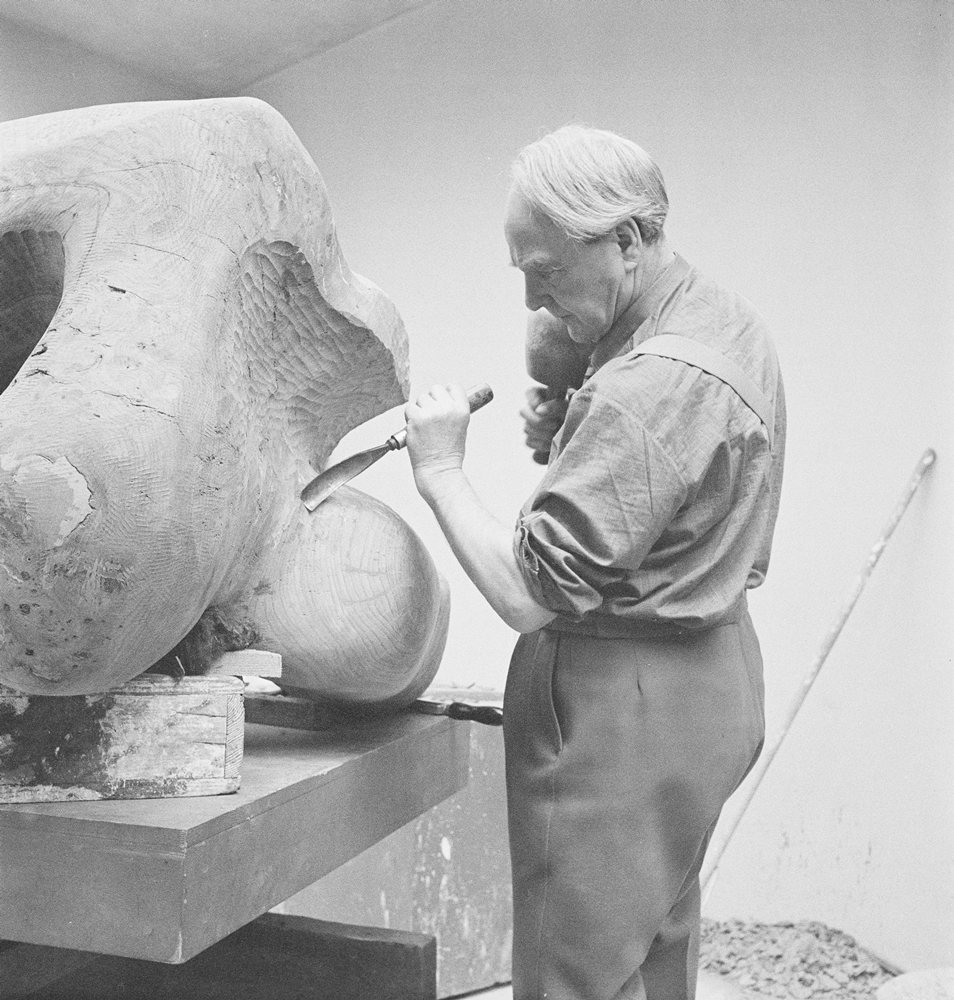
The indoor exhibition at the Shirley Sherwood Gallery is essential because it shows the smaller thinking behind the monumental effect. Models, drawings and sketchbooks reveal that Moore’s sculpture did not begin with grandeur. It often began with observation: a curve in a bone, a hollow in a stone, a branching form, a found object that suggested a body or a landscape. In this gallery, the exhibition slows down and becomes more intimate. You see the artist working through nature, not simply borrowing from it.
Many visitors will come for the monumental sculptures. The richer visit is to move between the Gardens and the gallery, seeing how a small natural form could become a public sculpture.
Planning Your Visit: Dates, Tickets & Tips
The exhibition runs from 9 May 2026 to 31 January 2027 at Kew Gardens in Richmond, London. Entry to Henry Moore: Monumental Nature is included with Kew Gardens admission, so you do not need a separate exhibition ticket for the main daytime visit. Booking online in advance is still the best option, both for value and for smoother planning, especially during weekends, school holidays and the summer months.
Because the exhibition is spread across the Gardens, it is best not to treat it like a compact gallery show. Allow at least two to three hours if you want to see a meaningful selection of the outdoor sculptures and visit the Shirley Sherwood Gallery. If you are visiting Kew for the first time, allow half a day: the Palm House, Temperate House, Treetop Walkway and seasonal planting can easily turn the exhibition into a broader cultural and botanical visit.
International visitors should pay close attention to the site’s scale. Kew is beautiful, but it is large, and this exhibition rewards comfortable shoes, weather-aware clothing and a flexible route. The Shirley Sherwood Gallery closes earlier than the Gardens, so do not leave the indoor section too late in the day. In summer, late afternoon light can be particularly good for sculpture, but some attractions and galleries may close before the Gardens themselves.
You can Book tickets directly through Kew’s official ticketing page.
Explore London’s Museums with a Private Guide
Planning more than one cultural visit in London? Our private museum tours help you explore the British Museum, National Gallery, Natural History Museum and Tate Modern with timed entry, expert commentary and a route shaped around your interests.
Discover Private London Museum ToursWhy Visit Henry Moore: Monumental Nature?
Henry Moore: Monumental Nature is worth visiting because it uses Kew not as a backdrop, but as an active part of the experience. Many sculpture exhibitions ask you to study objects. This one asks you to walk around them, see them against living forms, and notice how bronze changes in relation to bark, glass, water, grass and sky.
For visitors who already admire Moore, the exhibition offers scale and context: a broad view of his career across outdoor works and smaller studio pieces. For visitors who do not know his work well, Kew makes Moore unusually accessible. You do not need specialist knowledge of twentieth-century sculpture to understand the force of a massive form opening onto a landscape, or the quiet tension of two bronze points almost touching.
The exhibition is also a strong choice for travellers who want a cultural day outside central London’s busiest museum circuit. Kew combines art, botany, architecture and open space in a way few London venues can match. It is serious without feeling heavy, ambitious without being difficult, and spacious enough to let visitors find their own rhythm.
Practical Information
- Dates: 9 May 2026 – 31 January 2027
- Opening Hours: Kew Gardens: usually 10am to 7pm during the main summer period, with later weekend closing in some months. Last entry is normally one hour before closing. The Shirley Sherwood Gallery closes earlier, at around 5pm.
- Location: Kew Gardens, Kew, Richmond, London, TW9 3AE
- Tickets: Included with Kew Gardens entry. Peak adult tickets online from £25; after 4pm online from £10 between 1 May and 30 September; children aged 4–15 from £2 online; under 4s free; young person and student tickets from £10 online in peak season; concessions from £23 online in peak season; Universal Credit and Pension Credit tickets £1.
- How to Get There: Kew Gardens station is the closest station for Victoria Gate, served by the District line and London Overground. Kew Bridge station is convenient for Elizabeth Gate. Richmond station is useful for Lion Gate and onward connections.
Conclusion
Henry Moore: Monumental Nature is one of the most distinctive London exhibitions of 2026 because it changes the pace of looking. Instead of moving through a conventional gallery sequence, visitors encounter Moore’s sculpture through paths, trees, open lawns and glasshouses. It is a strong choice for anyone interested in British art, modern sculpture, landscape or simply a more spacious cultural day in London.
For more carefully selected museum and exhibition ideas, explore our private tours and London museum guides.
More London Exhibition Ideas
Looking for more temporary exhibitions during your stay? Browse our curated selection of major museum shows, practical tips and visitor guides.
View Exhibitions in LondonPlan a Museum Day in London
From ancient sculpture to modern art, London’s museums reward visitors who arrive with a clear route and a little context.
Explore Private Museum ToursAuthor: The London Museum Tours Team
This article was curated by the London Museum Tours team. With years of experience guiding visitors through London's permanent collections and temporary exhibitions, our goal is to help you plan the perfect visit.
Henry Moore: Monumental Nature – FAQ
-
Do I need a separate ticket for Henry Moore: Monumental Nature?
No. The exhibition is included with standard entry to Kew Gardens during daytime opening hours. You should still book your Kew Gardens ticket online in advance for the best value and easier planning.
-
How long should I allow for the exhibition?
Allow at least two to three hours if you want to see the outdoor sculptures and the Shirley Sherwood Gallery. First-time visitors to Kew may prefer to plan a half-day visit.
-
Is the exhibition suitable for children?
Yes. The outdoor setting makes the exhibition accessible for families, and Kew has a daytime family programme connected with the sculptures. Children must be accompanied by an adult.
-
Can I take photographs of the Henry Moore sculptures at Kew?
Outdoor photography for personal use is generally possible at Kew, but visitors should follow Kew’s current photography rules and any signage in gallery spaces. Tripods, commercial photography or filming may require permission.
-
What is the nearest Tube station to Kew Gardens?
Kew Gardens station is the closest station for Victoria Gate and is served by the District line and London Overground. Kew Bridge station is useful for Elizabeth Gate.
-
Is the Shirley Sherwood Gallery included in the visit?
Yes. The indoor gallery exhibition is part of Henry Moore: Monumental Nature and is included with entry to Kew Gardens, but the gallery closes earlier than the Gardens.
-
Is Kew Gardens accessible for visitors with reduced mobility?
Kew Gardens has many accessible paths and visitor facilities, but the site is large and some routes may be affected by weather or maintenance. Check Kew’s accessibility information before visiting if you have specific mobility requirements.
-
What else can I see at Kew Gardens during the same visit?
You can combine the exhibition with Kew’s major attractions, including the Palm House, Temperate House, Treetop Walkway and seasonal gardens. Some attractions close before the Gardens, so check times before planning your route.