Early Netherlandish Drawings – British Museum Guide 2026
What is the Early Netherlandish Drawings exhibition?
Early Netherlandish Drawings is a free British Museum exhibition exploring how drawing in the Low Countries evolved from a workshop tool into an art form in its own right. On view in Room 90 from 16 April to 20 September 2026, it brings together around 120 sheets by artists including Rogier van der Weyden, Lucas van Leyden, Pieter Bruegel the Elder and Hendrick Goltzius.
Exhibition at a Glance
- What: Early Netherlandish Drawings
- Where: British Museum, London
- When: 16 April 2026 – 20 September 2026
- Why Go: Rare drawings rarely seen in public
- Tickets: Free entry. Check Museum entry guidance before you go.
About the Exhibition: Early Netherlandish Drawings
Early Netherlandish Drawings is the kind of exhibition that quietly changes the way you look. At first glance, it is a show about works on paper. In practice, it is about the moment drawing in the Low Countries stopped being only a means to an end and began to claim its own place as an object worth keeping, studying and collecting. That shift matters because so many of these sheets were never meant to survive. They were folded into workshop life, passed from master to pupil, used for stained glass, tapestries, paintings and prints, then discarded when their job was done.
That is why this exhibition feels unusually precious. The British Museum holds one of the world’s major collections in this field, and the show uses that strength to tell a story that is often fragmented elsewhere: how Netherlandish artists in the fifteenth and sixteenth centuries learned from observation, copied one another, borrowed from Italy, absorbed classical forms, and gradually made drawing a medium of invention rather than just preparation. If you are already planning time at the British Museum, this exhibition gives you a focused, intellectually satisfying way into that longer history.
It also arrives with the benefit of fresh scholarship. The exhibition grows out of a British Museum research project on Netherlandish drawings and reflects five years of combined curatorial, conservation and scientific work. That is more than a nice academic backstory: it means some of the most interesting things in the room are not simply the famous names, but the revised attributions, workshop connections and technical findings that help explain how these drawings were actually made and used. For readers looking to compare this show with others across the city, our guide to Exhibitions in London is the natural next stop.
Artists and Must-See Works
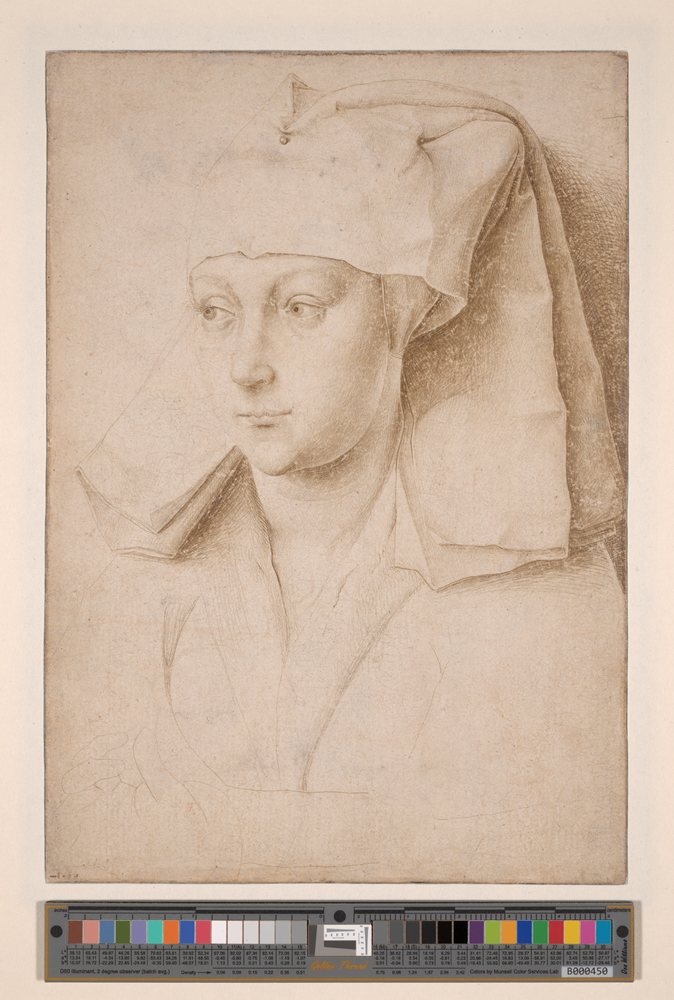
Start with Rogier van der Weyden’s Portrait of a young woman, because it sets the emotional temperature of the whole exhibition. The sheet is small, but it has the concentrated intensity of something much larger. Silverpoint leaves no room for hesitation: the metal stylus bites lightly into the prepared surface, and every adjustment has to be earned through patience rather than erasure. Here the woman’s headdress, cheek and lowered gaze are built out of such fine gradations of tone that the lines almost disappear. The result is not softness exactly, but restraint under exquisite control. The British Museum describes it as widely regarded as the only known drawing by Rogier’s own hand, and the large-print guide adds an especially revealing twist: the sheet is likely a free copy after a lost portrait by Jan van Eyck. In other words, one great Netherlandish artist may be seen thinking through another, on paper, at intimate scale.
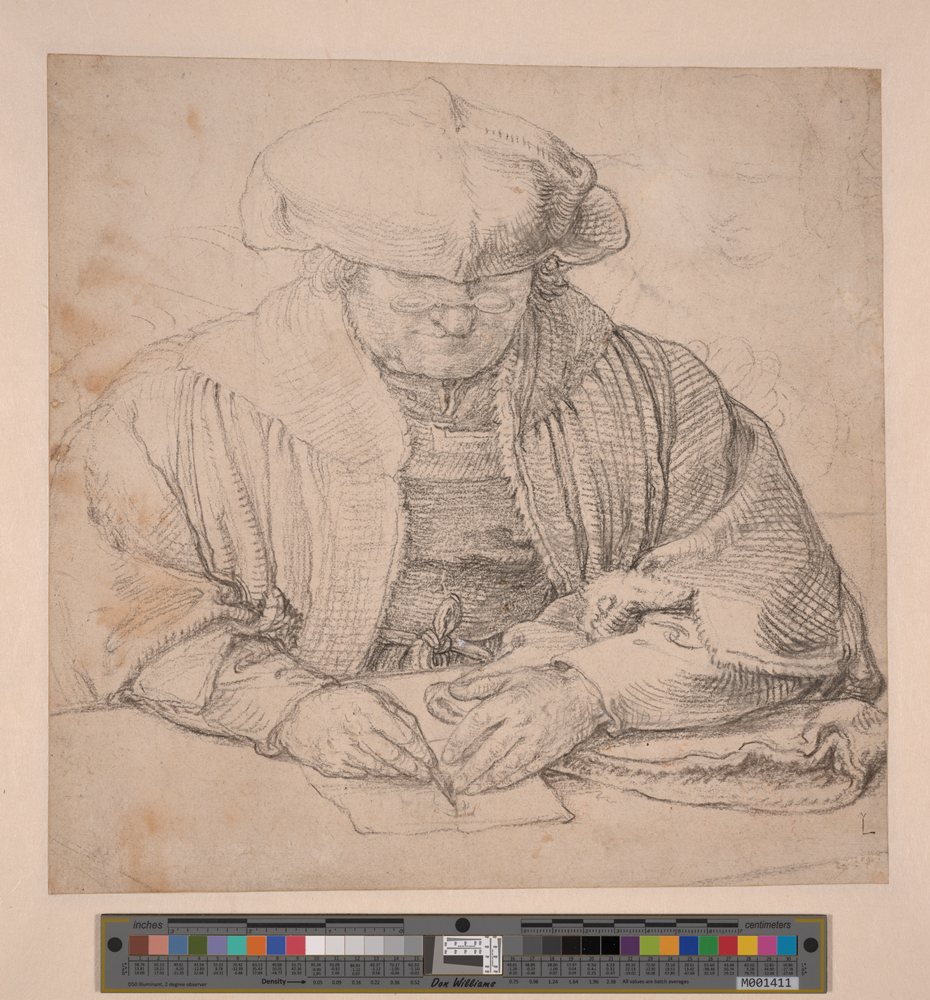
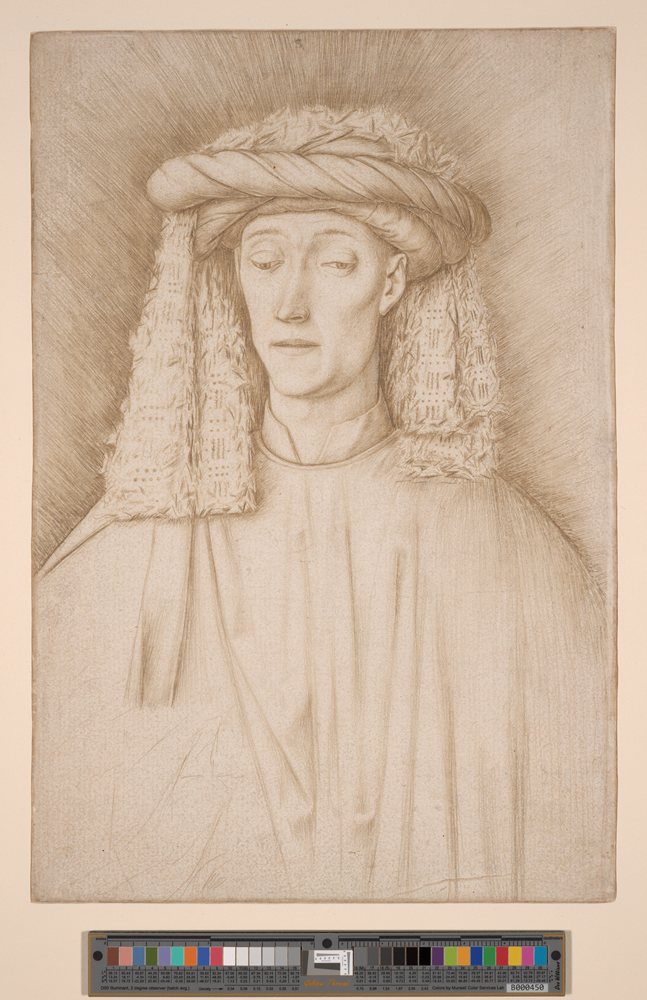
Lucas van Leyden brings a different energy. His drawings often feel quicker, more exploratory, more alert to character in the moment. In A man in a fur hat, drawn when he was probably still a teenager, the sitter’s face is striking precisely because it is not flawless. The nose sits in profile while the rest of the head turns in three-quarter view, a small mismatch that makes the drawing feel alive rather than polished into stiffness. The Museum’s guide notes that Lucas may have drawn it from life, and that sense of direct encounter is what stays with you. Nearby works show how quickly he moved from portraiture to invention. A study such as The Virgin and Child reveals the artist thinking through light, pressure and finish, leaving some passages fully shaped and others deliberately schematic, as if you are standing beside the drawing board at the exact moment composition is becoming form.
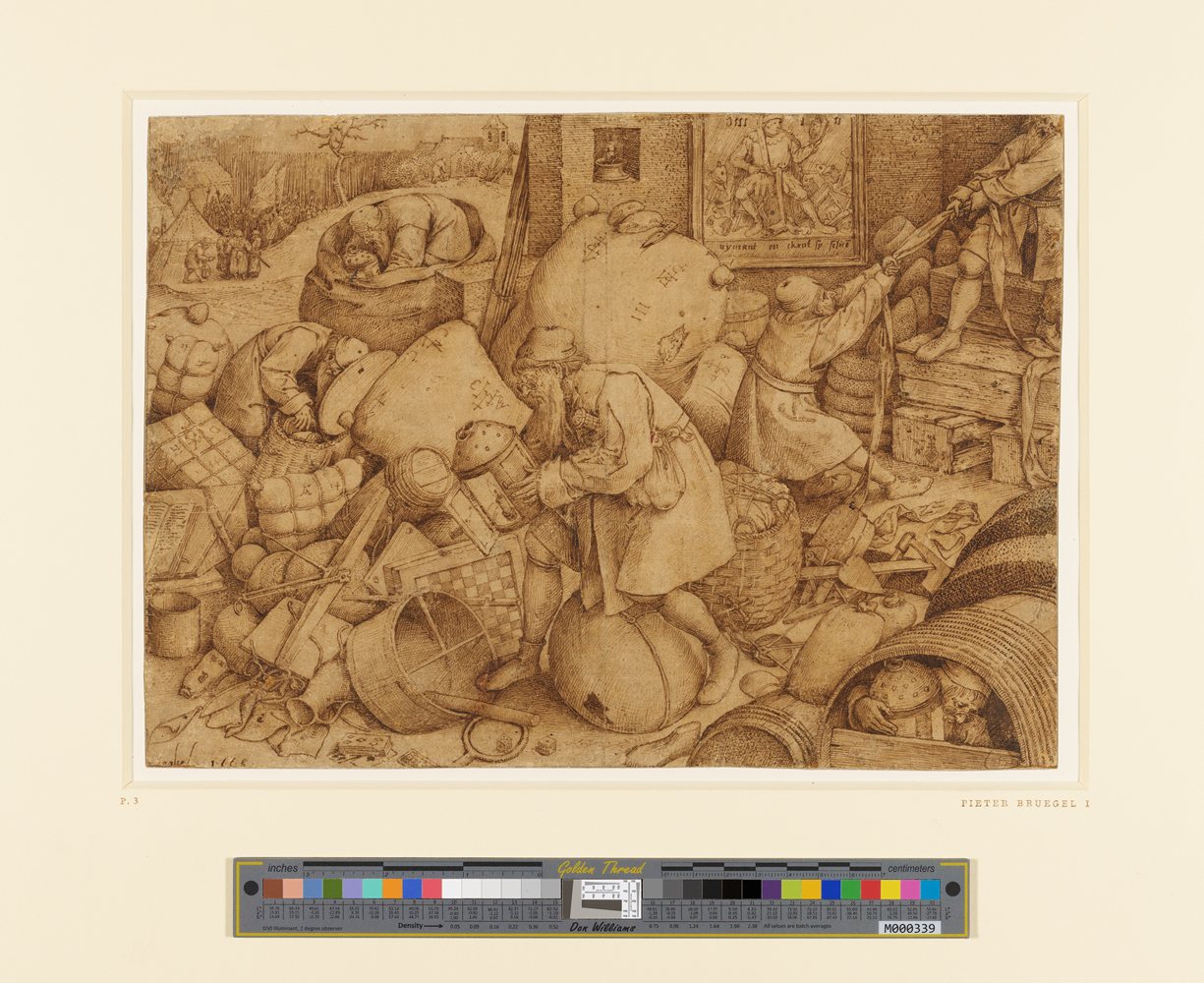
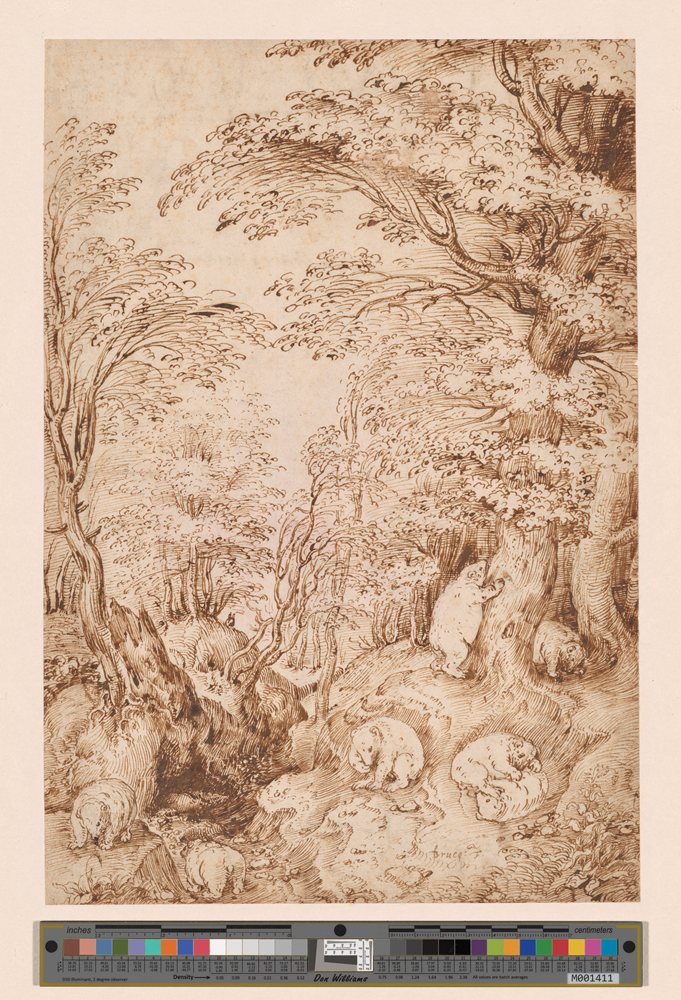
Pieter Bruegel the Elder opens the exhibition outward into landscape and moral imagination. His Mountain landscape with a river has the spaciousness of travel memory rather than topographical record: distant heights, a winding path, tiny travellers and the sensation that the eye could keep moving for much longer than the paper allows. The British Museum identifies the sheet as made during Bruegel’s time in Italy, and the exhibition guide explains that these early landscapes were inspired by Alpine panoramas he had seen on his journey south. That matters because the drawing captures a turning point in northern art: the landscape is no longer just a background for sacred drama, but a world with its own weather, scale and mood. If you want a second Bruegel moment, look for the moral print designs such as Elck or Avarice, where proverbs, folly and commerce collide in densely peopled scenes that feel distinctly urban and unmistakably sixteenth-century.
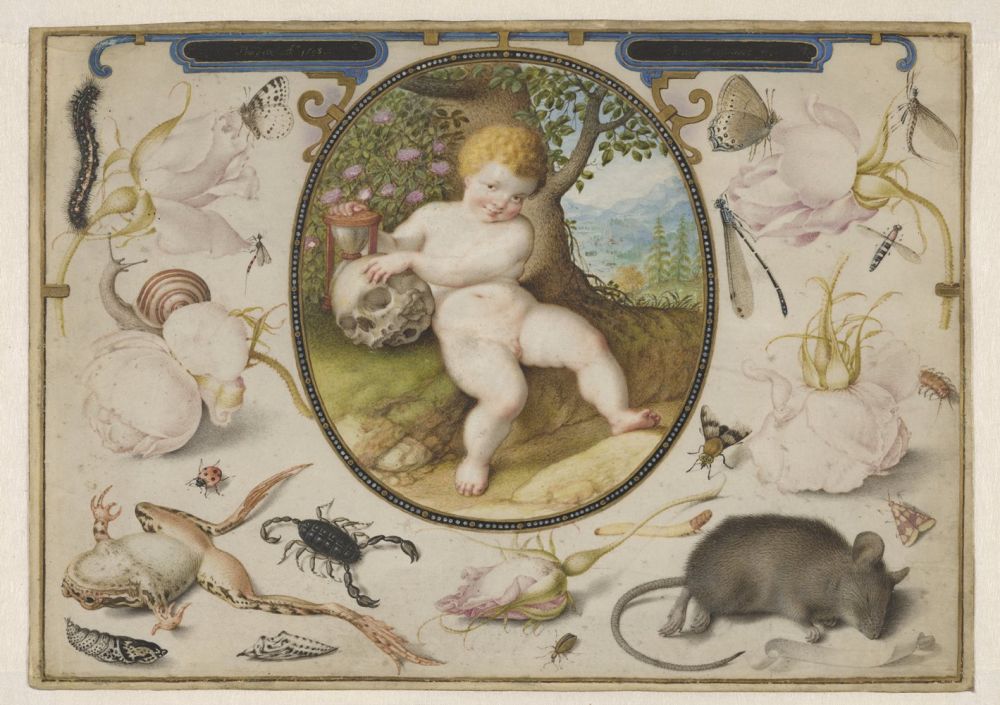
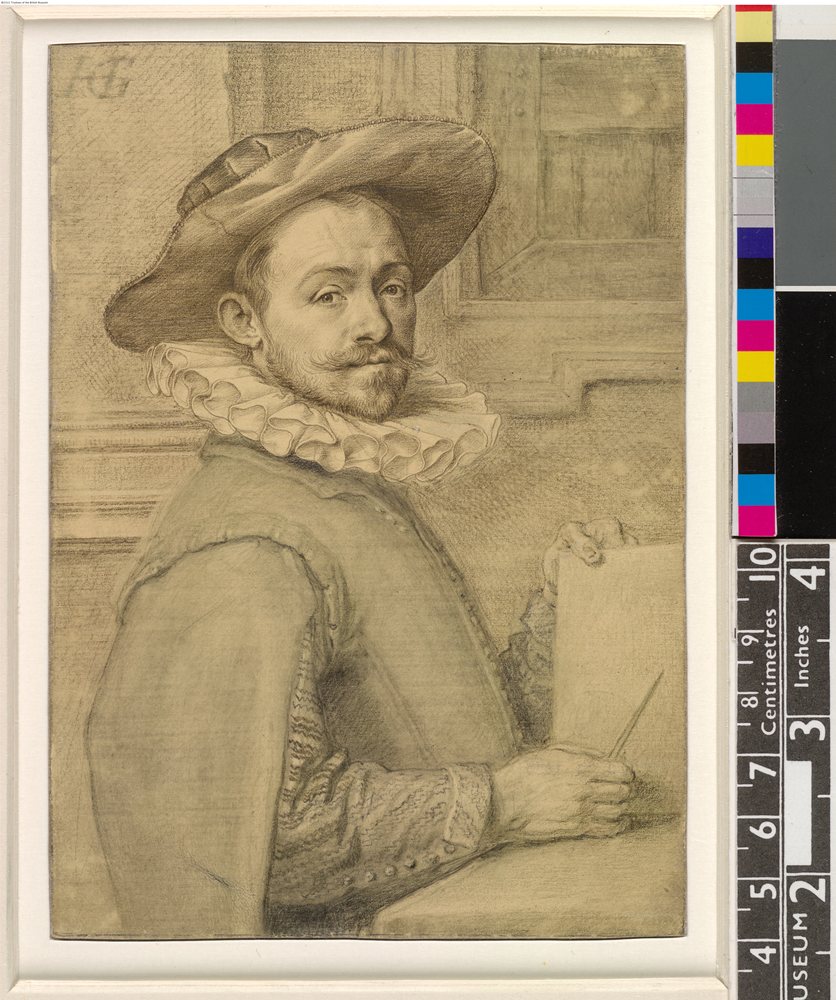
Hendrick Goltzius, at the far end of the story, shows how far Netherlandish drawing had travelled by the late sixteenth century. His Self-portrait holding a burin is as self-aware as Rogier’s portrait is inward. He presents himself not as a workshop artisan caught at work, but as a gentleman-artist, elegant ruff in place, copper plate and burin visible like professional insignia. The medium is telling: silverpoint, revived here as a consciously refined, old-master technique. Then comes Sine Cerere et Baccho friget Venus, a bravura pen drawing on vellum whose swelling lines imitate the bite and flourish of engraving. It is a collector’s object, intellectually playful and technically dazzling, built around the classical proverb that love grows cold without food and wine. By the time you reach Goltzius, the exhibition’s central argument has become unmistakable: drawing has moved from backstage labour to front-of-house display.
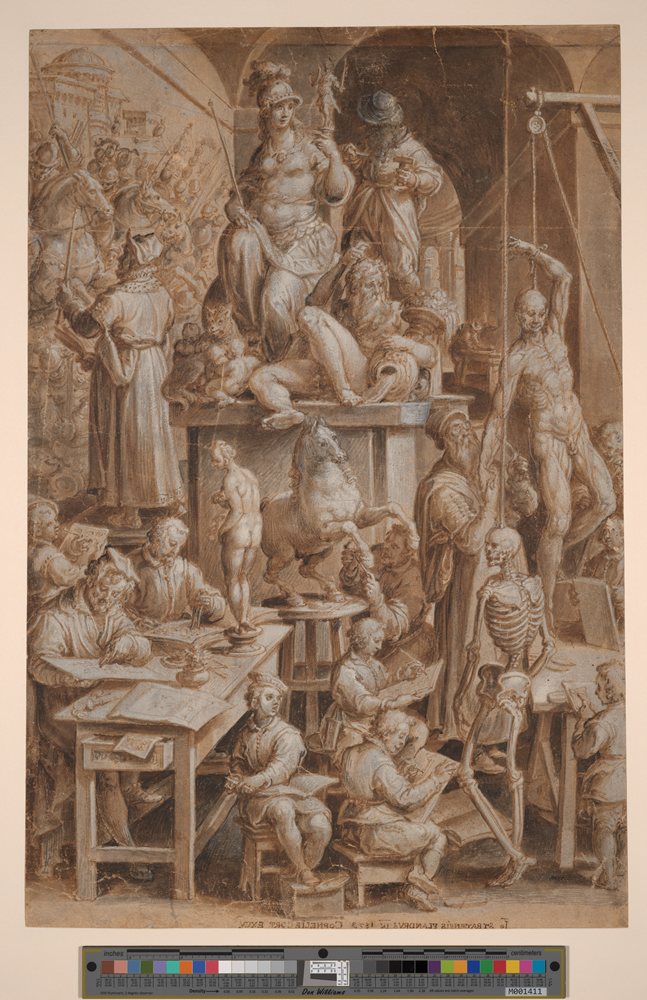
One of the pleasures of the exhibition is that it does not use famous names as a shortcut. Workshop sheets, copies, designs for stained glass and studies after lost paintings are treated as evidence, not filler. That is exactly right. In a show about origins, the supposedly secondary material often does the real explanatory work. Look closely at how blind stylus scratches create highlights, how chalk behaves differently from metalpoint, and how a drawing can shift from being a practical studio tool to something made for a collector’s cabinet. Many visitors rush to the signatures. The better strategy here is to follow the techniques.
Planning Your Visit: Dates, Tickets & Tips
The exhibition runs from 16 April to 20 September 2026 in Room 90, so it is easy to build into a broader British Museum day rather than treat as a separate outing across London. Because it is free, this is exactly the kind of show worth prioritising on a weekday morning, when the room is likely to feel calmer and the drawings can be read slowly. Works on paper do not reward the quick museum glance; they ask for a little more silence and a little more time. For most visitors, 60 to 90 minutes is a sensible allowance for the exhibition itself, especially if you plan to read the labels carefully and compare the workshop drawings with the finished, highly resolved sheets nearby.
International visitors should also think practically about scale. This is not a blockbuster built around spectacle, and that is part of its appeal. If you are travelling with family members or friends who are not all equally interested in early drawing, it works well as a focused stop inside a larger Museum itinerary: one person can linger over Rogier or Bruegel while the rest of the group continues into the permanent collection and meets again in the Great Court. If you want a quieter atmosphere, avoid compressing this exhibition into the final stretch of an already overfull museum day. The subtlety of silverpoint and chalk is easiest to appreciate before visual fatigue sets in.
As ever in London, it is worth checking the Museum’s latest visitor guidance before you set off. Entry to the exhibition is free, and the British Museum’s general admission is free too, but timed entry policies can change at busy periods. For overseas visitors, the simplest strategy is to arrive with the exhibition as your first fixed stop, then use the rest of the day flexibly. Room 90 sits best within a sequence that alternates concentration and scale: this exhibition first, then the wider Museum. That rhythm tends to make both experiences stronger.
Explore the British Museum with an Expert Guide
Maximise your time at the British Museum with a bespoke private tour centred on the permanent collection. It is an ideal companion to this exhibition: after the intimacy of the drawings, a private guide can help place the Museum’s greatest objects into a wider story of empire, exchange, belief and artistic achievement.
Discover the British Museum Private TourWhy Visit Early Netherlandish Drawings?
This exhibition is worth your time because it offers something London’s museum calendar does not always provide: a genuinely close look at artistic thought in formation. Instead of finished masterpieces framed by fame alone, you see decisions, revisions, habits of looking, traces of workshop teaching and the slow emergence of artistic individuality. For visitors who already know the paintings of van Eyck, Bruegel or Goltzius, the exhibition adds texture. For visitors who do not, it offers a more human way in.
It also makes a persuasive case for why drawing matters even if you do not think of yourself as a specialist. You do not need prior knowledge of Netherlandish art to understand the fascination of a face built line by line in silverpoint, or of a landscape that turns travel into atmosphere, or of a design meant for engraving that still carries the speed of the hand. The room teaches you how to look, and that is one of the highest compliments a temporary exhibition can earn.
Most of all, it is unique because of the British Museum’s holdings and because the show is rooted in new research rather than recycled reputation. This is not just a survey of beautiful sheets. It is an argument about how northern European artists learned, collaborated, adapted foreign influences and transformed drawing into a medium of ambition. Even if you usually gravitate toward painting, sculpture or architecture, this exhibition has the clarity and concentration to win you over.
Practical Information
- Dates: 16 April 2026 – 20 September 2026
- Opening Hours: Daily 10.00–17.00
- Location: British Museum, Great Russell Street, London WC1B 3DG
- Tickets: Free entry
- How to Get There: Tottenham Court Road (about 5 minutes on foot), Holborn (about 7 minutes), Russell Square (about 7 minutes)
Conclusion
Early Netherlandish Drawings is one of those exhibitions that rewards attention rather than speed. It offers rarity, scholarly substance and the quiet pleasure of seeing how great artists thought on paper before, beside or beyond the finished work. For anyone visiting London in 2026, it is an excellent reason to set aside time for the British Museum’s works on paper. For more ideas, continue with our British Museum guides and London museum tours coverage.
Author: The London Museum Tours Team
This article was curated by the London Museum Tours team. With years of experience guiding visitors through London's permanent collections and temporary exhibitions, our goal is to help you plan the perfect visit.
Early Netherlandish Drawings – FAQ
-
Do I need to book a separate ticket for Early Netherlandish Drawings?
The exhibition is listed as free, so there is no paid exhibition ticket. It is still wise to check the British Museum’s current visitor guidance before you go, especially during busy periods and school holidays.
-
How much time should I allow for the exhibition?
Allow around 60 to 90 minutes if you want to read the labels and look properly at the drawings. This is a compact but concentrated show, and the quieter, slower pace is part of the experience.
-
Can I take photographs inside the exhibition?
At the British Museum, hand-held photography and video recording are generally allowed for private purposes in most galleries, but signs indicate where restrictions apply. Because this exhibition contains light-sensitive works on paper, always follow the gallery instructions on the day.
-
Is the exhibition suitable for children?
Yes, especially for older children and teenagers interested in drawing, printmaking or Renaissance art. This is a thoughtful, object-led exhibition rather than a hands-on family show, so it tends to suit visitors who enjoy looking closely.
-
Is the exhibition accessible for wheelchair users or visitors with reduced mobility?
The Museum provides step-free access routes, and most lifts are wheelchair accessible. For the smoothest visit, check the Museum map and accessibility page before arrival to plan your route to Room 90.
-
Are there multilingual resources for international visitors?
The British Museum’s audio app for the wider collection is available in multiple languages including English, Spanish, Italian and French. Exhibition interpretation is typically in English, so international visitors may want to read the exhibition page in advance and use the visit as part of a broader Museum day.
-
Can I combine this exhibition with the permanent collection on the same day?
Yes — and that is probably the best way to experience it. Because the exhibition is in Room 90 within the British Museum, it works especially well as a focused stop inside a longer visit to the permanent galleries.