James McNeill Whistler – Tate Britain Exhibition 2026
What is the James McNeill Whistler exhibition?
The James McNeill Whistler exhibition at Tate Britain is a major 2026 retrospective devoted to the American-born artist who transformed Victorian art with his portraits, nocturnes, Thames views and radical belief in beauty for its own sake. It runs from 21 May to 27 September 2026, with adult tickets from £24.
Exhibition at a Glance
- What: James McNeill Whistler
- Where: Tate Britain, London
- When: 21 May – 27 September 2026
- Why Go: Whistler’s largest European retrospective in decades
- Tickets: From £24. Book online in advance.
About the Exhibition: James McNeill Whistler
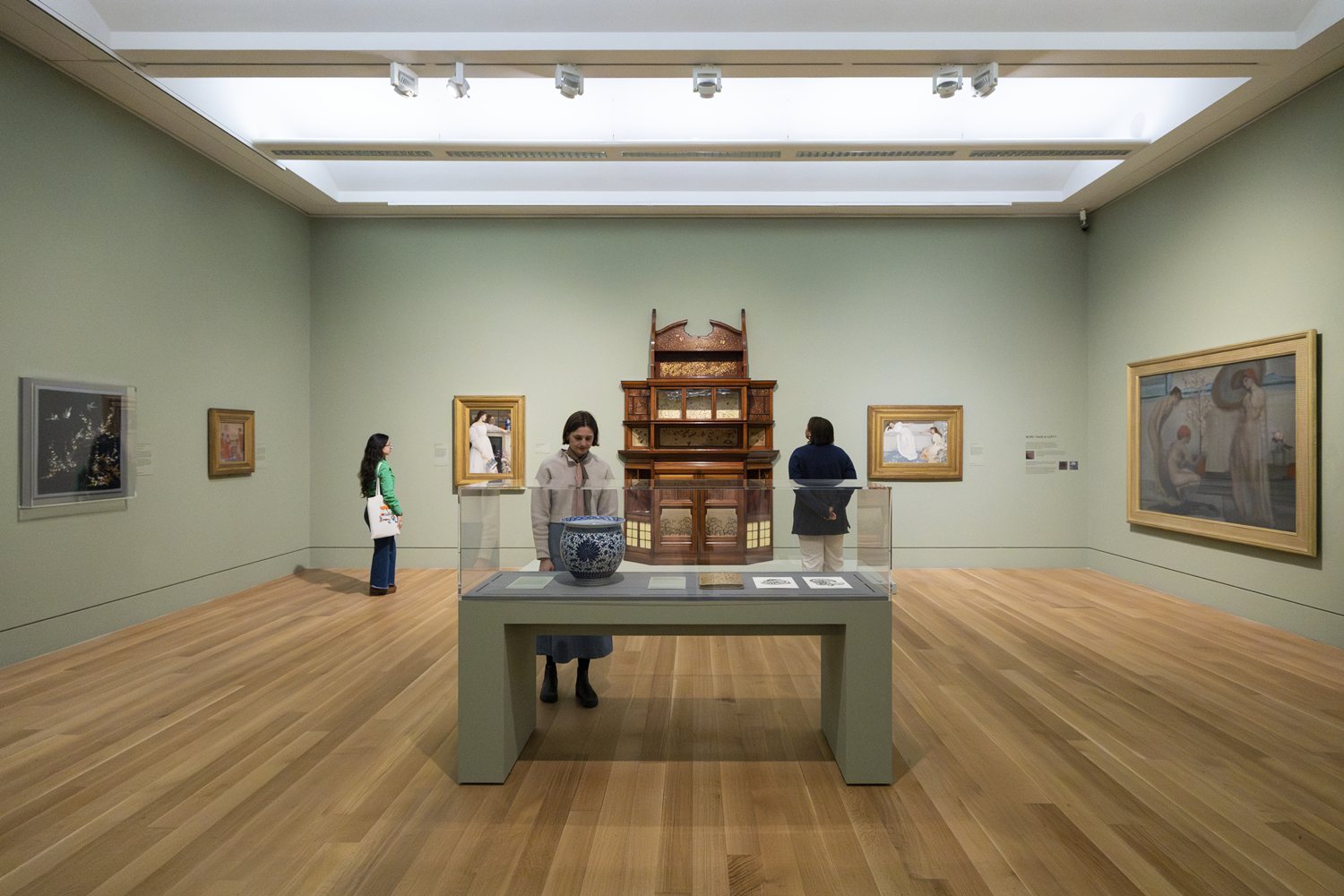
James McNeill Whistler at Tate Britain brings together the many sides of an artist who never fitted comfortably into one school, one country or one label. Born in the United States, trained partly in Russia, shaped by Paris and transformed by London, Whistler became one of the most distinctive painters of the nineteenth century. His art moves between realism and atmosphere, portraiture and abstraction, social observation and pure visual arrangement.
The exhibition is especially important because it is described by Tate as Europe’s largest retrospective of Whistler in three decades. For visitors following Exhibitions in London, it is one of the major art events of the 2026 season: a chance to see world-famous works alongside paintings, prints, drawings and objects that are rarely brought together in one place.
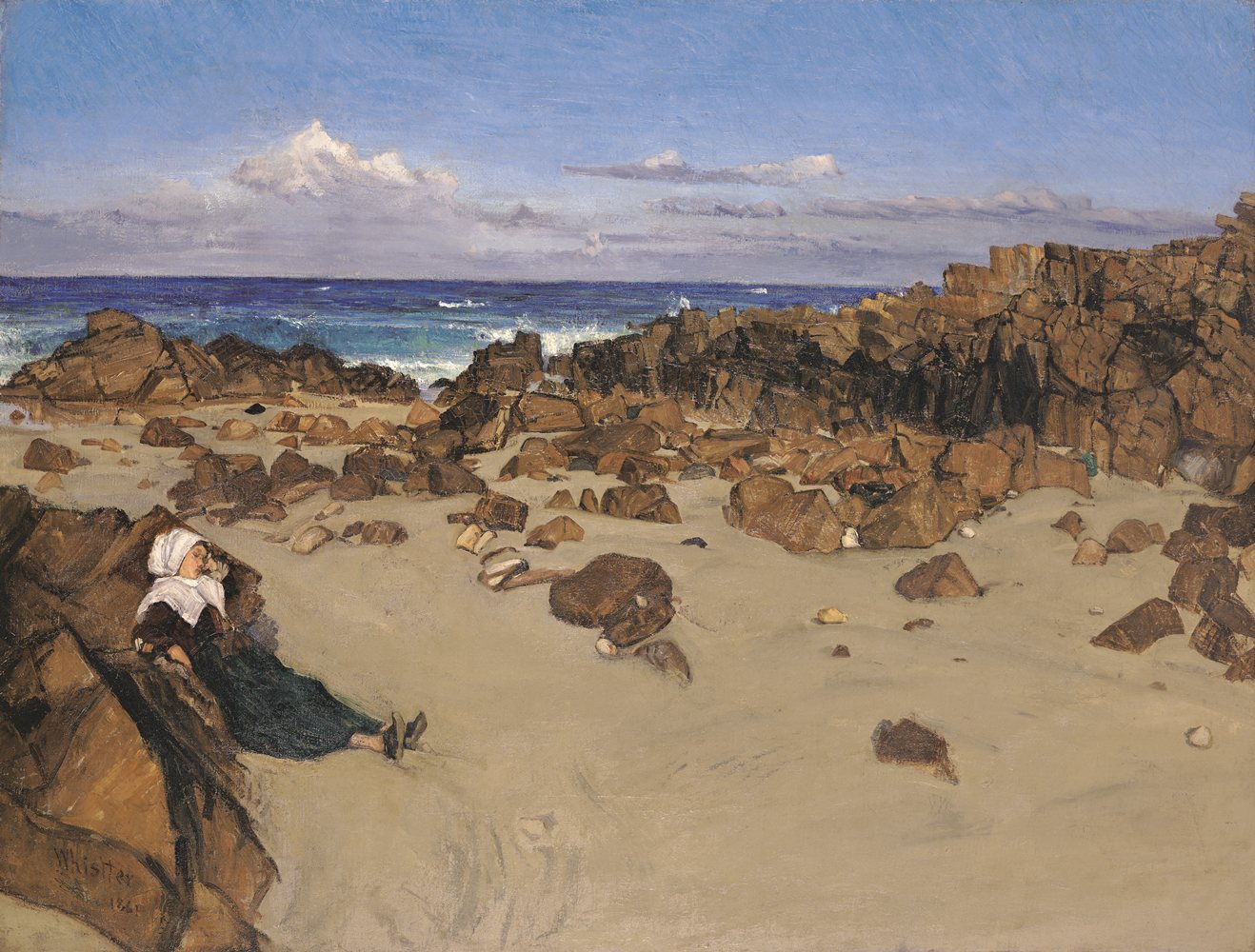
Whistler’s career is often remembered through a handful of images: his severe portrait of his mother, the smoky bridges of the Thames, the ghostly figures in white, the fireworks and night skies that scandalised Victorian critics. But the strength of this exhibition is that it does not treat those works as isolated icons. It follows the artist’s development from early sketches and Parisian experiments to London river scenes, society portraits, decorative interiors and the late works shaped by travel, illness and financial crisis.
What emerges is not simply a painter of elegance. Whistler was a deliberate maker of atmosphere. He turned the industrial Thames into mist, bridges and muted colour; he made portraiture feel like music; and he pushed painting towards modernism while still working in the world of Victorian exhibitions, patrons and public controversy. His titles — Arrangement, Symphony, Harmony, Nocturne — are not decorative flourishes. They tell the visitor how to look: less for anecdote, more for tone, balance, rhythm and sensation.
Artists and Must-See Works
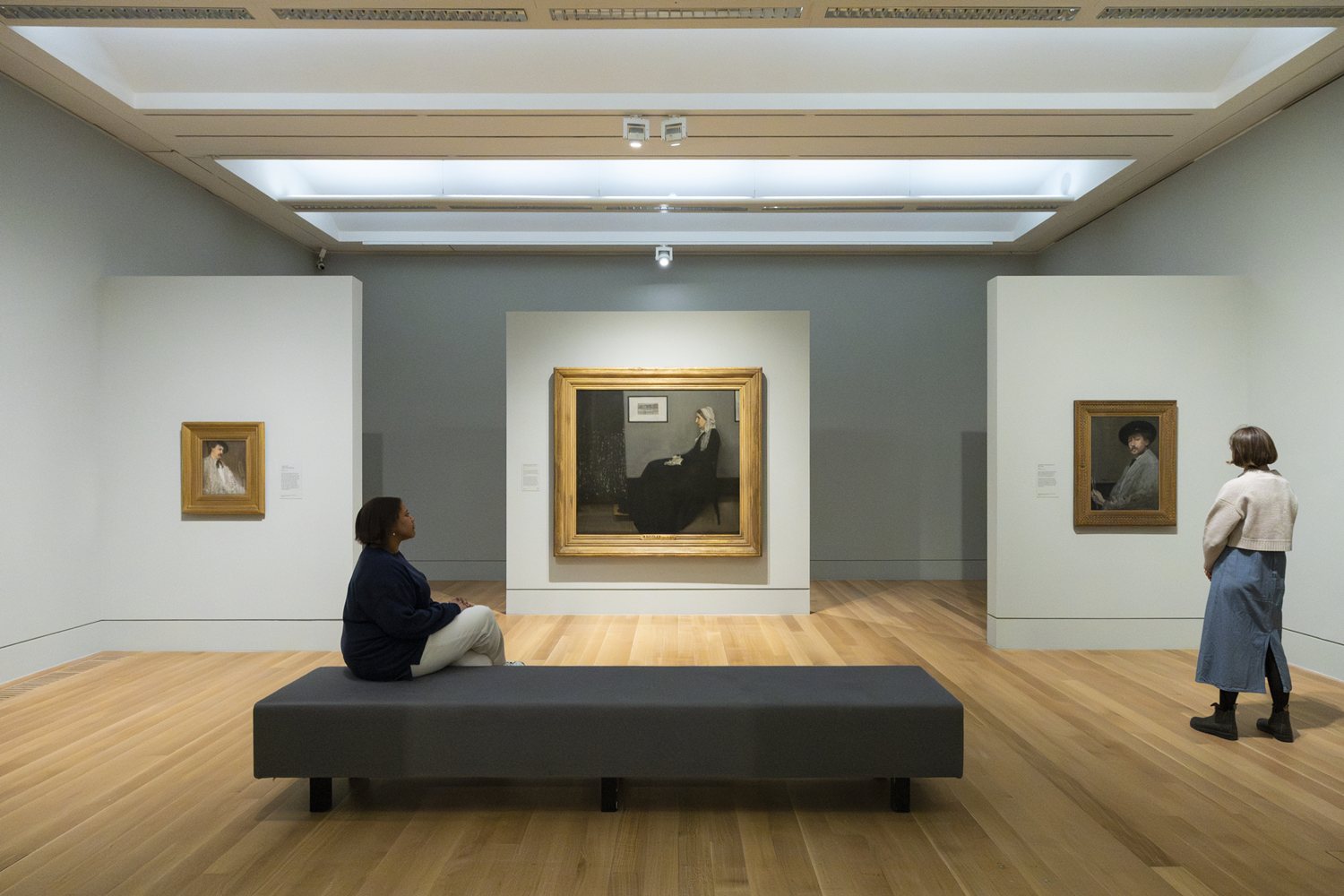
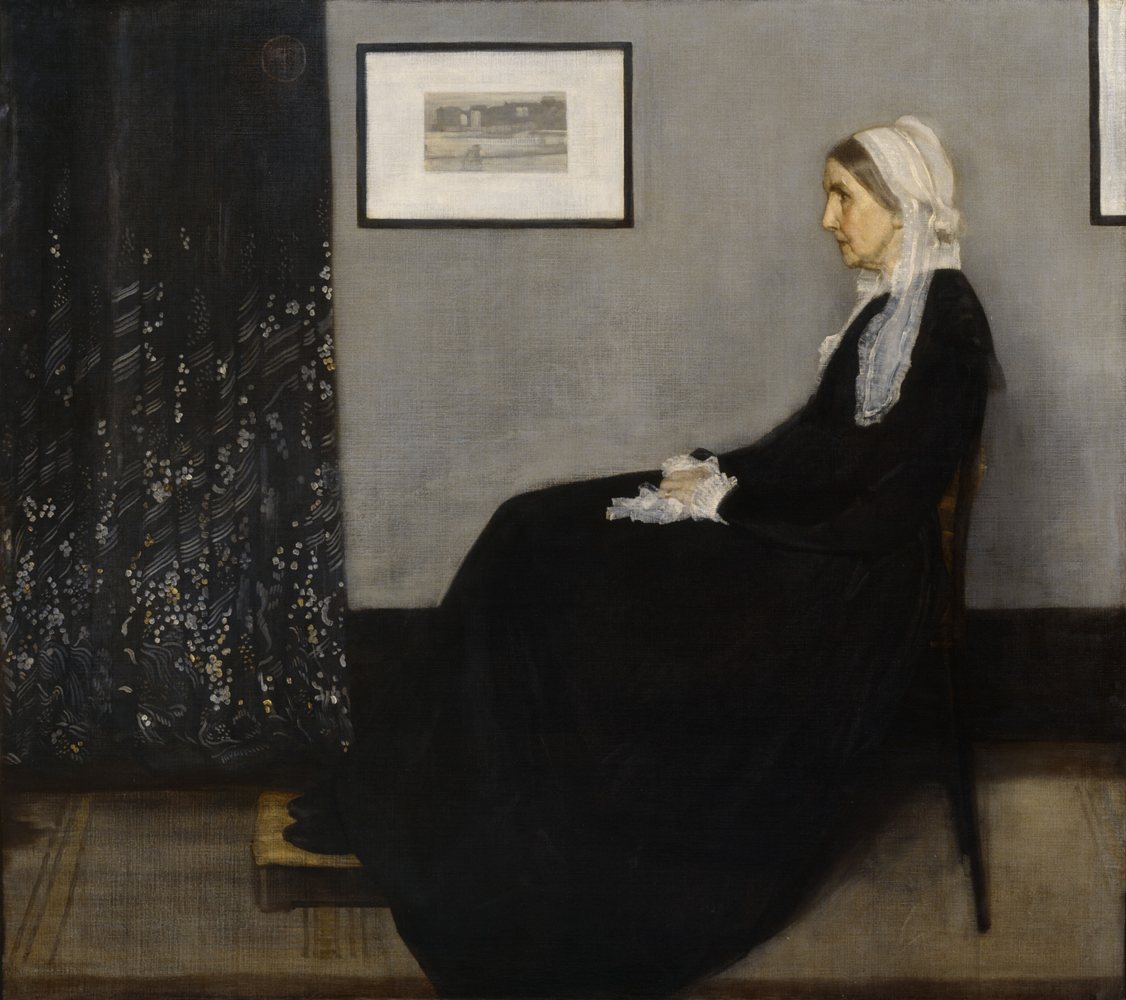
James McNeill Whistler is the central figure throughout, and the exhibition’s greatest advantage is the range of his work on display. The natural place to begin is Arrangement in Grey and Black No. 1, better known as Whistler’s Mother. Painted in 1871 and now in the Musée d’Orsay, it is one of the most famous American paintings outside the United States. Yet its power comes from restraint rather than sentiment. The seated figure of Anna McNeill Whistler is held almost entirely in greys and blacks: the white cap, the folded hands, the framed print on the wall and the dark curtain at the side all feel measured, silent and exact.
What many visitors miss is that Whistler did not want this picture to be read primarily as a family portrait. Its formal title matters. It asks us to see the work as an arrangement of tones, a composition in which motherhood, age and memory are present but disciplined by line, surface and balance. The painting was bought by the French state in 1891, a striking recognition for an American artist whose most famous image had been made in London and preserved in Paris.
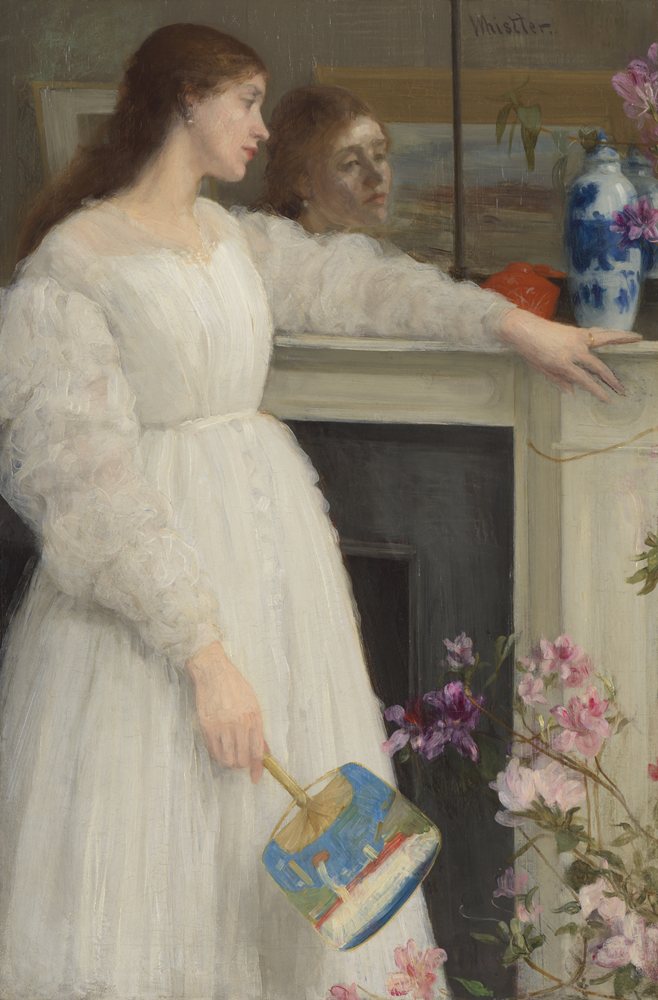
Symphony in White, No. 2: The Little White Girl offers a very different Whistler. Painted in 1864, it shows Joanna Hiffernan standing in a white dress, her face turned toward a mirror, a Japanese fan held in her hand. The work belongs to the moment when Japanese prints and objects were reshaping European taste. The whiteness is not simple purity; it is a field of variation, from fabric and skin to reflection and flower. The picture rewards slow looking: the stillness of the figure, the decorative fan, the cropped arrangement and the subdued tension between presence and reflection.
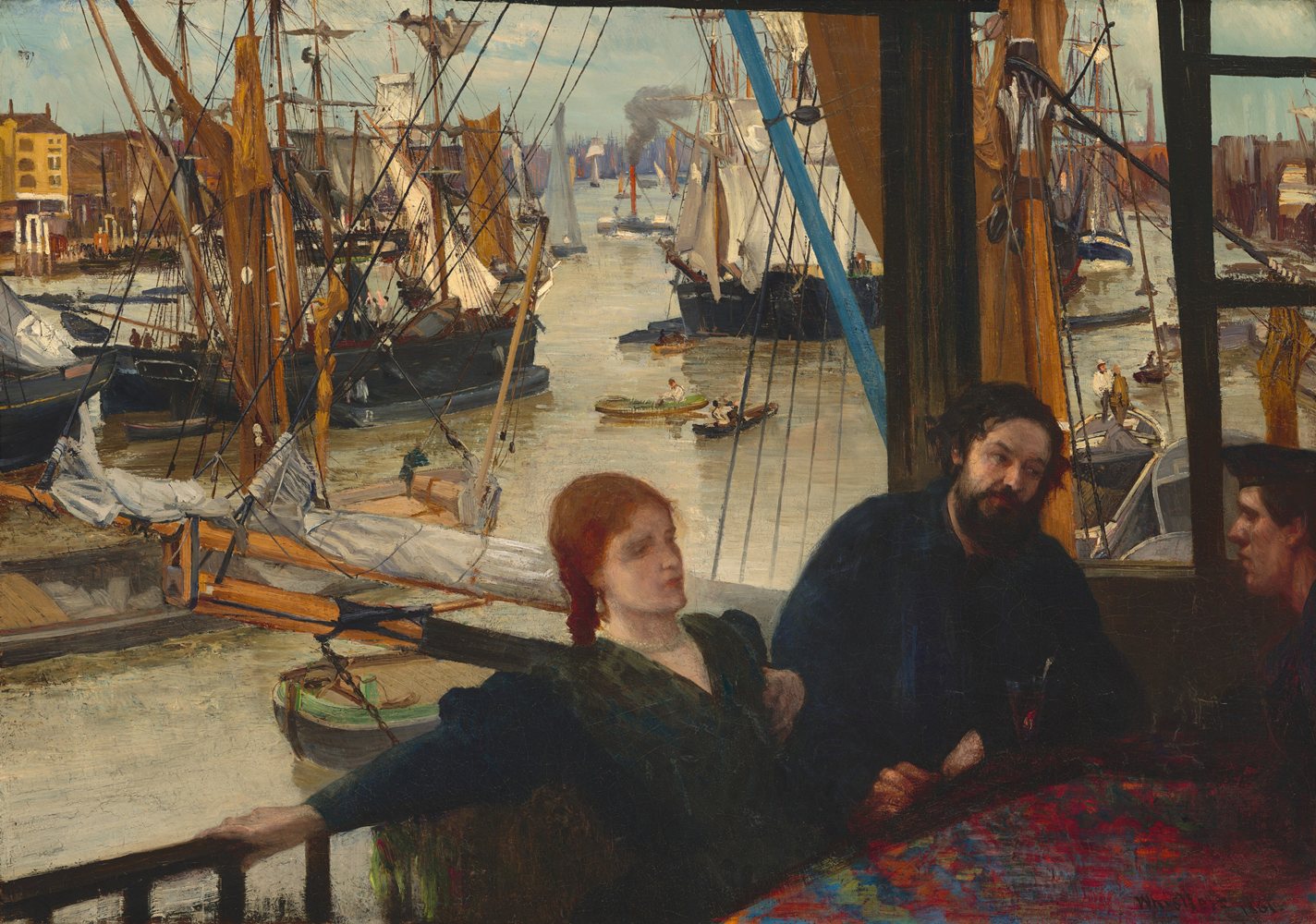
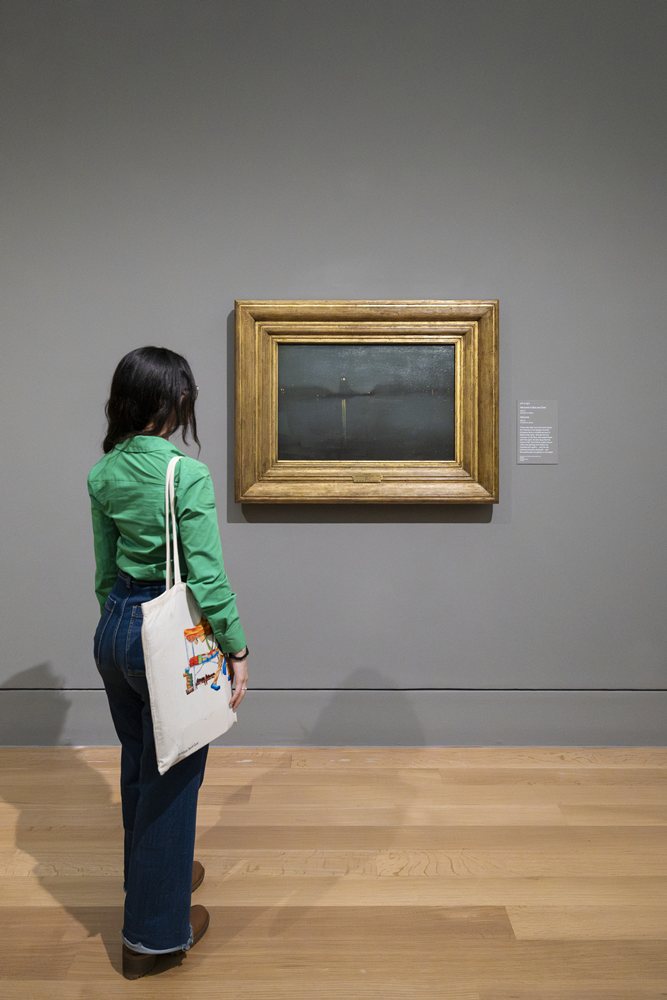
Whistler’s Thames paintings are likely to be among the most memorable parts of the visit. Nocturne: Blue and Gold – Old Battersea Bridge, painted around 1872–75, reduces the river to a few vertical and horizontal accents: the bridge seen from below, the soft moonlit water, and the distant Albert Bridge under construction. The work feels almost weightless, but it is rooted in a very specific London — the working river, the new bridges, the fog and smoke of the nineteenth-century city. Whistler’s achievement was to turn that modern industrial setting into an image of near-abstraction.
The nocturnes also explain why Whistler mattered so much to later artists. They are not simply views of London at night. They are studies in how little a painting needs in order to hold the eye. In Nocturne: Black and Gold – The Fire Wheel, the subject is fireworks at Cremorne Gardens, but the effect is almost immaterial: sparks, smoke, darkness and movement. This kind of painting was controversial because it seemed to reject the labour, detail and moral storytelling expected by many Victorian viewers.
That controversy reached its most famous point with John Ruskin’s attack on Whistler’s art. Ruskin accused the artist, in relation to another nocturne, of effectively throwing paint at the public; Whistler sued him for libel in 1878. He won the case, but received only a farthing in damages, and the legal battle damaged him financially. For a modern visitor, the episode is useful because it clarifies the stakes. Whistler was not merely painting misty scenes; he was defending a new idea of art, one in which colour, atmosphere and visual sensation could matter more than narrative explanation.
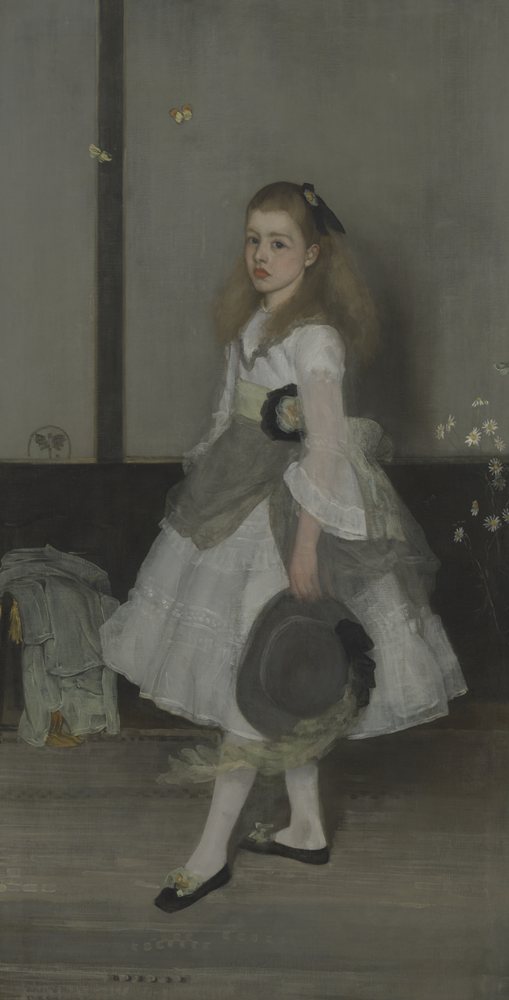
The exhibition also gives space to Whistler the portraitist. Works such as Harmony in Grey and Green: Miss Cicely Alexander reveal how he could transform a child portrait into a study of poise, tension and design. The girl’s pale dress, narrow stance and carefully controlled setting avoid the easy sweetness of Victorian childhood imagery. Everything is composed: the angle of the body, the line of the hat, the cool greens and greys, the sense that the sitter is both present and held at a distance.
Finally, Whistler’s decorative ambitions are essential to understanding the exhibition. His work on interiors, especially the world of the Peacock Room, shows that he wanted art to move beyond the framed canvas. The famous room, originally created for the London home of Frederick Leyland and now preserved by the Smithsonian’s National Museum of Asian Art, was designed around colour, pattern, porcelain and peacock imagery. It belongs to the same aesthetic world as the paintings: one in which art becomes environment, mood and complete visual experience.
Whistler’s best works do not shout for attention. They ask visitors to slow down until greys, whites, blues and golds begin to behave like music.
Planning Your Visit: Dates, Tickets & Tips
The exhibition runs at Tate Britain from 21 May to 27 September 2026. Tate Britain is open daily from 10.00 to 18.00, and major temporary exhibitions are best booked in advance, especially at weekends, during school holidays and in the final weeks of the run. Adult tickets are listed from £24, with Tate Members admitted free.
For most visitors, this is not a quick exhibition. Allow at least 90 minutes if you want to follow the story properly, and closer to two hours if you are interested in the prints, drawings and less familiar works as well as the famous paintings. Whistler’s art depends on tonal shifts and subtle contrasts; rushing from highlight to highlight risks missing the very thing that makes the exhibition distinctive.
International visitors should remember that Tate Britain is not Tate Modern. Tate Britain is on Millbank, near Pimlico and Westminster, and focuses on British art and major temporary exhibitions connected with the British art world. Tate Modern is across the river at Bankside. If you are planning an art-focused day, the two can be combined by riverboat, but Whistler alone deserves enough time to be seen without pressure.
Book your timed ticket through the official Tate page before travelling. The permanent collection at Tate Britain is free, so a good plan is to visit the Whistler exhibition first, then continue into the Turner galleries or the wider British collection if your schedule allows. The exhibition is particularly rewarding for visitors interested in Impressionism, Japonisme, nineteenth-century London, Aestheticism and the beginnings of modern art.
Explore London’s Museums with a Private Guide
Make your museum time in London more meaningful with a private guided experience tailored to your interests. From the British Museum and National Gallery to Tate Modern and the Natural History Museum, London Museum Tours helps visitors discover the city’s great collections with expert context and a relaxed pace.
Discover Private London Museum ToursWhy Visit James McNeill Whistler?
This exhibition is worth visiting because Whistler’s work sits at a fascinating crossroads. He is close enough to realism to show the modern city, close enough to Impressionism to dissolve it in atmosphere, and close enough to Symbolism and modern abstraction to make subject matter feel secondary to sensation. Few artists of his generation make the shift from nineteenth-century portraiture to modern visual experience feel so direct.
For visitors who do not know Whistler well, the exhibition offers a clear route into his world. The famous paintings provide familiar anchors, but the deeper pleasure lies in the connections between them: the river and the studio, the Japanese fan and the London interior, the portrait as arrangement, the night scene as music, the artist as both celebrity and provocateur.
It is also a strong exhibition for people who do not normally seek out nineteenth-century art. Whistler does not ask the viewer to decode complex mythology or follow a dense historical narrative. His paintings work through mood, surface and timing. A bridge becomes a pattern; a mother becomes an arrangement; a firework becomes a pulse of gold in darkness. That makes the exhibition unusually accessible, while still intellectually rich.
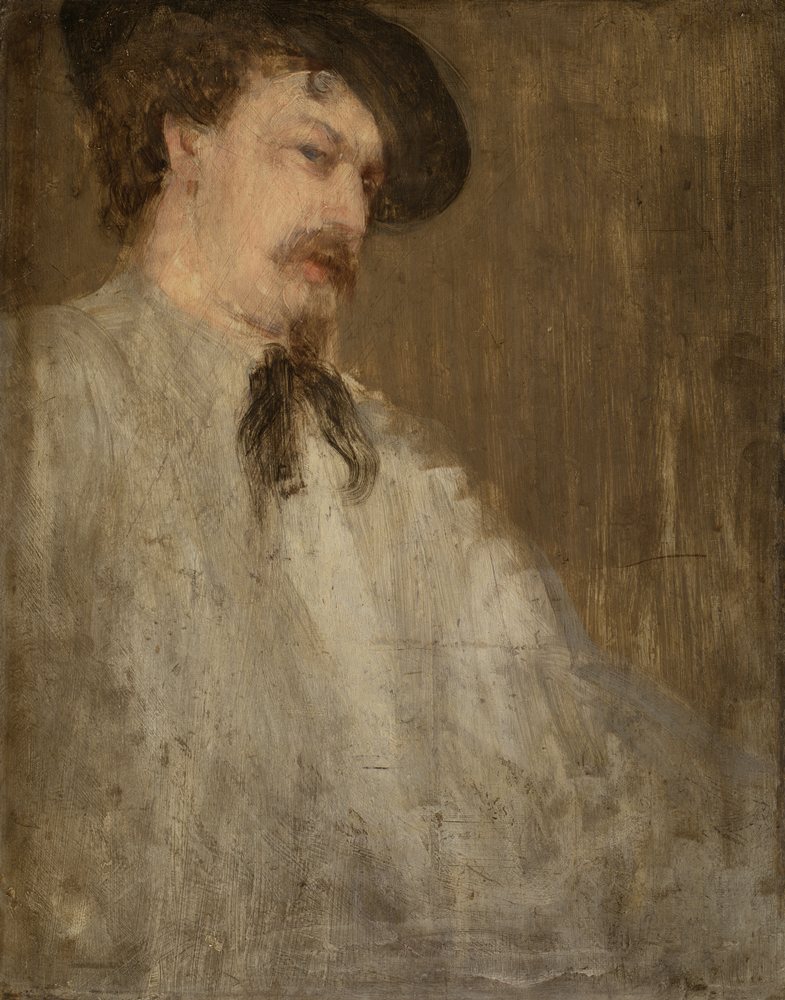
Above all, this is a chance to see Whistler as more than the painter of one famous mother. Tate Britain presents him as an artist of experiment: painter, printmaker, designer, self-inventor and advocate for a new kind of beauty. For anyone interested in how modern art emerged from the nineteenth century, this exhibition should be high on the London list.
Practical Information
- Dates: 21 May – 27 September 2026
- Opening Hours: Daily, 10.00–18.00
- Location: Tate Britain, Millbank, London SW1P 4RG, United Kingdom
- Tickets: Adult tickets from £24; Tate Members free. Check the Tate booking page for current concessions and availability.
- How to Get There: The nearest Underground station is Pimlico. Westminster and Vauxhall are also within reach, and Tate Britain can be combined with Tate Modern by riverboat from Millbank Pier.
Conclusion
James McNeill Whistler at Tate Britain is one of the key London exhibitions of 2026: a rare opportunity to see the artist’s portraits, nocturnes, prints and decorative imagination in a single, carefully framed retrospective. It is especially valuable for visitors who want to understand how nineteenth-century art moved toward modernism through atmosphere, colour and design. Plan enough time, book in advance, and approach the exhibition slowly. For more cultural ideas in the city, explore our London museum tours and temporary exhibition guides.
Author: The London Museum Tours Team
This article was curated by the London Museum Tours team. With years of experience guiding visitors through London's permanent collections and temporary exhibitions, our goal is to help you plan the perfect visit.
James McNeill Whistler – FAQ
-
Do I need to book the James McNeill Whistler exhibition in advance?
Advance booking is strongly recommended, especially for weekends, holidays and the final weeks of the exhibition. Tate may have some tickets available on the day, but a timed ticket is the safer option for international visitors.
-
Is Tate Britain the same as Tate Modern?
No. Tate Britain is on Millbank, near Pimlico and Westminster, while Tate Modern is on Bankside. The Whistler exhibition is at Tate Britain.
-
How long should I allow for the Whistler exhibition?
Allow around 90 minutes for the exhibition, or up to two hours if you want to look carefully at the prints, drawings and less familiar works. Whistler’s paintings reward slow viewing.
-
Is the Whistler exhibition suitable for children?
The exhibition is best suited to older children, teenagers and adults with an interest in art, London or visual culture. Younger children may find the subject matter quiet, although the nocturnes and famous portraits can still be engaging with adult guidance.
-
Can I see Whistler’s Mother in the exhibition?
Yes. The exhibition includes Arrangement in Grey and Black No. 1, widely known as Whistler’s Mother, on loan from the Musée d’Orsay in Paris.
-
Is Tate Britain free to enter?
Entry to Tate Britain’s permanent collection is free, but major temporary exhibitions such as James McNeill Whistler require a paid ticket unless you qualify for free entry, such as Tate Membership.
-
What else can I visit near Tate Britain?
Tate Britain is close to Westminster, Pimlico and the River Thames. Nearby options include Westminster Abbey, the Houses of Parliament area, the Garden Museum across Lambeth Bridge, or a riverboat connection towards Tate Modern.