Korea - British Museum Exhibition 2026
What Is the Korea Exhibition at the British Museum?
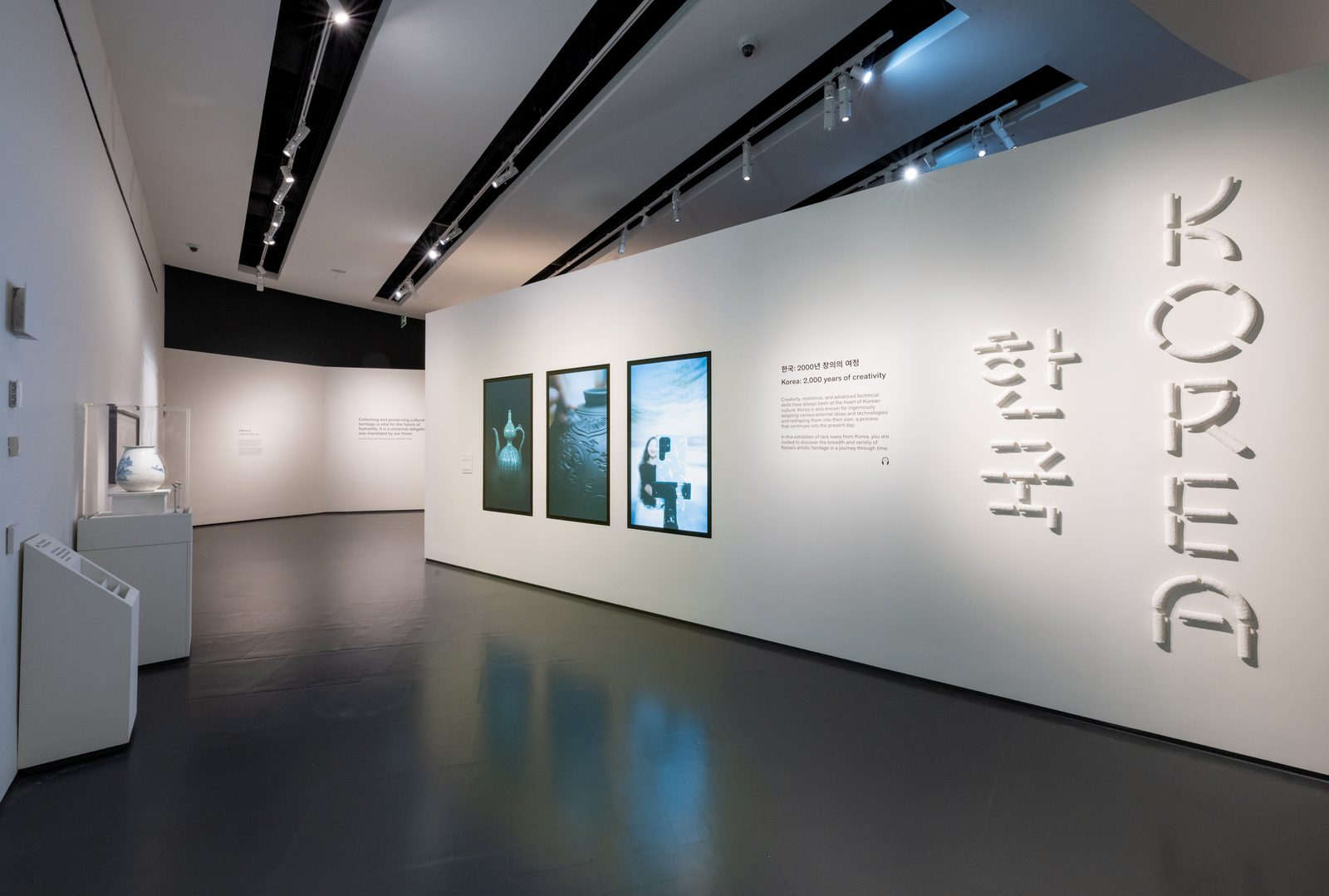
Korea is a major British Museum exhibition tracing more than 2,000 years of Korean art, from early Iron Age objects and Buddhist sculpture to Joseon painting and contemporary work. Running until 31 January 2027, it brings together exceptional loans from Korea's national collections, including designated National Treasures and Treasures.
Exhibition at a Glance
- What: Korea
- Where: The British Museum, London
- When: 1 October 2026 – 31 January 2027
- Why Go: Two millennia of Korean creativity
- Tickets: From £18, sold by the British Museum — book on the official site
About the Exhibition: Korea
The first impression of Korea is one of scale compressed into intimacy. Its chronology reaches from around 300 BC to the present, yet the story is carried by objects made for human hands and particular rooms: a pierced stoneware stand for a burial rite, a small gilt-bronze icon for private devotion, an indigo sutra opened like a dark-blue fan, and a folding screen that once transformed the space behind a king.
The exhibition draws almost entirely from the 23,000 works donated in 2021 by the family of the late Samsung chairman Lee Kun-Hee to the National Museum of Korea and the National Museum of Modern and Contemporary Art, Korea. Most of the objects have not been shown in the UK before. The British Museum describes the display as the most comprehensive chronological survey of Korean visual and material culture presented in Europe for more than 40 years.
That breadth matters because the exhibition refuses to treat Korean art as a closed national style. Buddhism travelled from India through Central Asia and China; ceramic technologies were adopted and transformed; modern artists worked through colonisation, division, war and migration. Across those changes, the curators keep returning to creative adaptation: imported forms become unmistakably Korean, while old materials continue to carry new ideas.
The setting adds another layer. The exhibition occupies Room 35, the Joseph Hotung Great Court Gallery, while the British Museum's free permanent collection includes a dedicated Korea Gallery in Room 67. Visitors interested in a wider cultural day can also browse our guide to Exhibitions in London.
Korea Exhibition Highlights: Objects to Look For
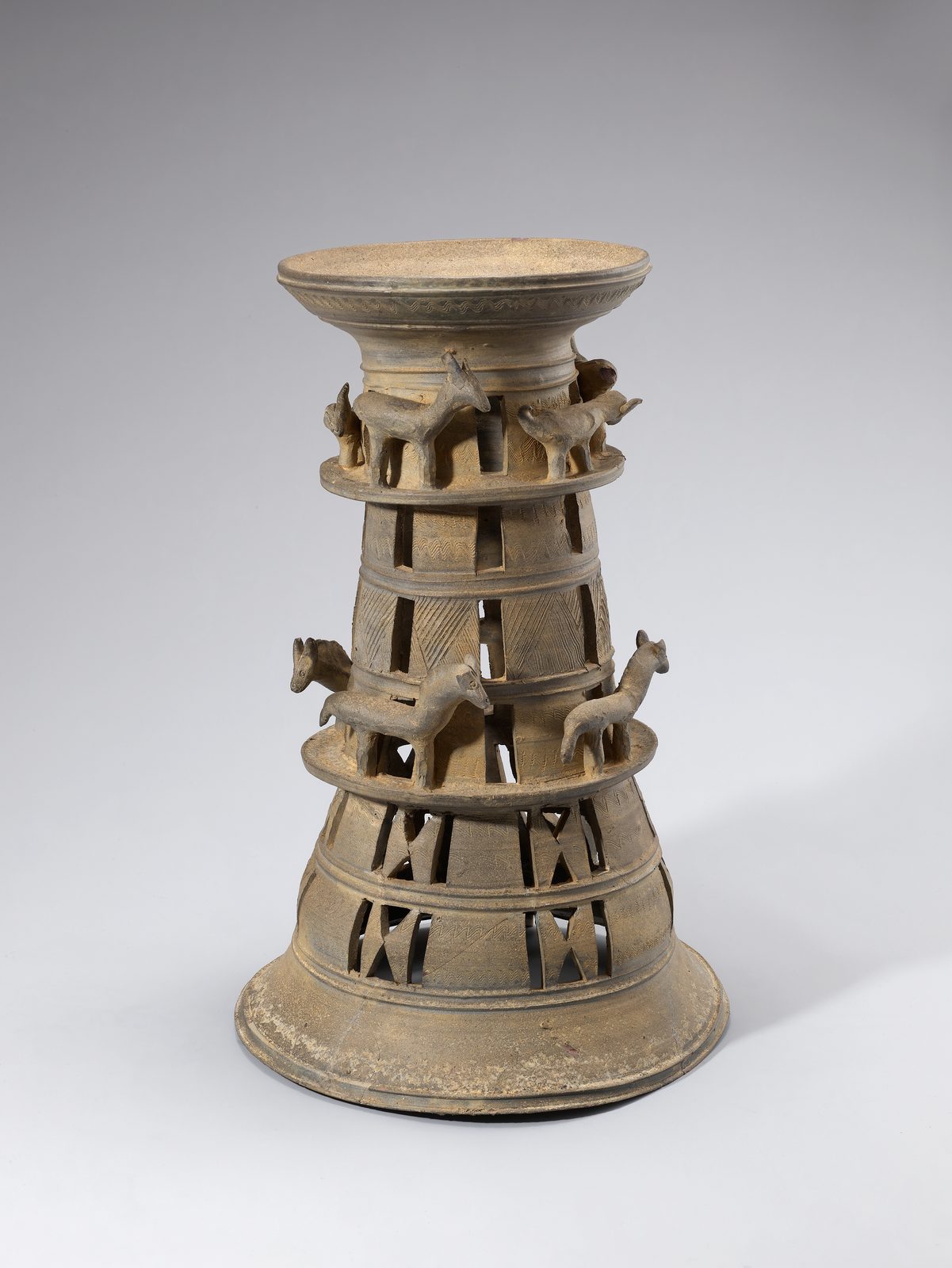
Begin with the Three Kingdoms period and the tall stoneware pedestal stand made around AD 400–500. Its stacked, wheel-thrown sections are pierced with geometric openings, while small modelled animals pace around two ledges. The stand probably supported food or wine in a burial ceremony. That contrast — humble clay worked into an elaborate stage for ritual offerings — is a useful introduction to the exhibition's larger theme of technical imagination.
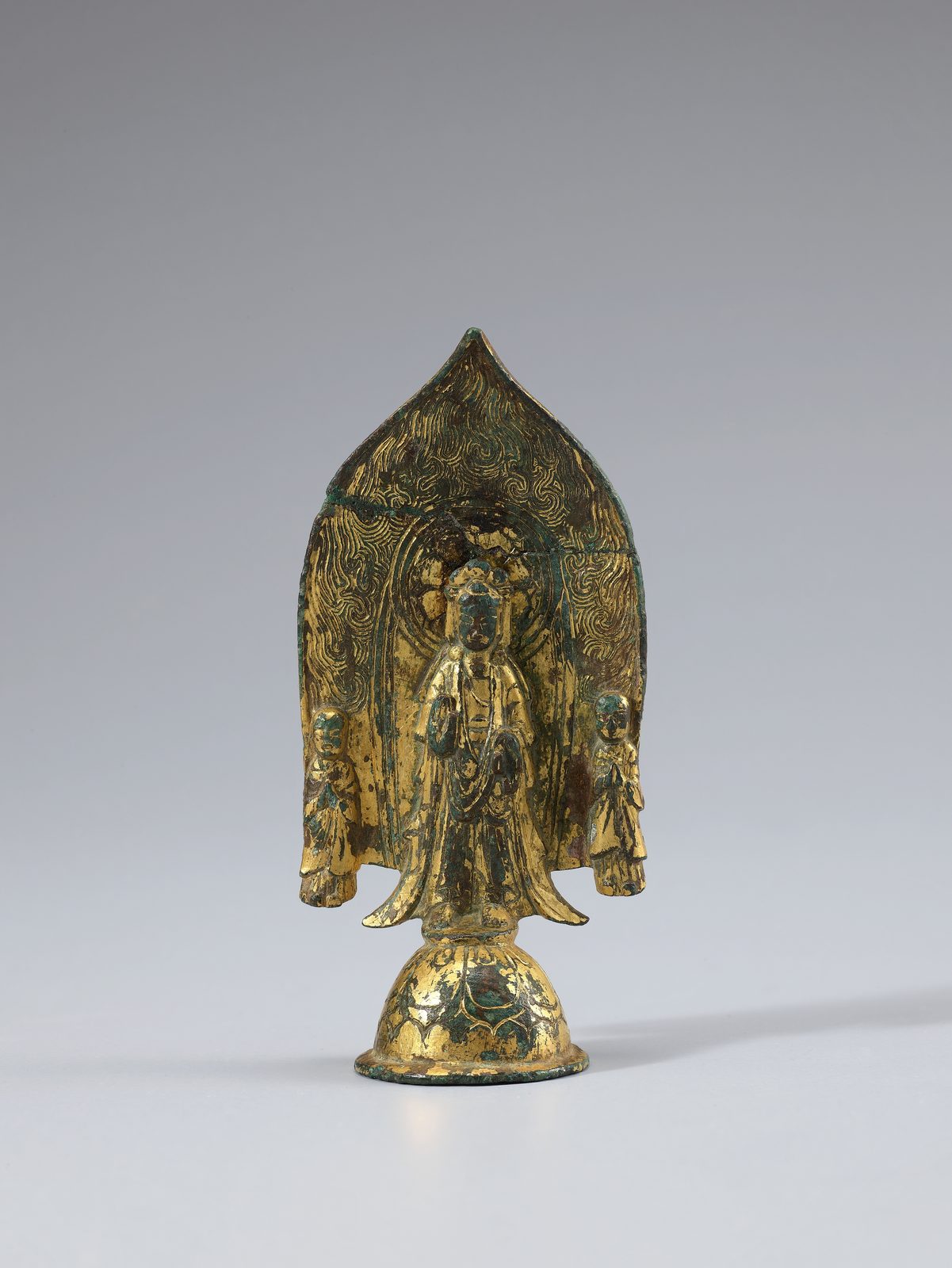
Nearby, the sixth-century Bodhisattva Triad with a Single Halo is small enough to have belonged to a personal devotional setting, but its gold surface gives it a concentrated radiance. The central figure and attendants share a flame-shaped halo, a format that became widespread in Korea during this period. Look closely at the robes spreading into swallow-tail folds: what first appears still and frontal begins to feel weightless.
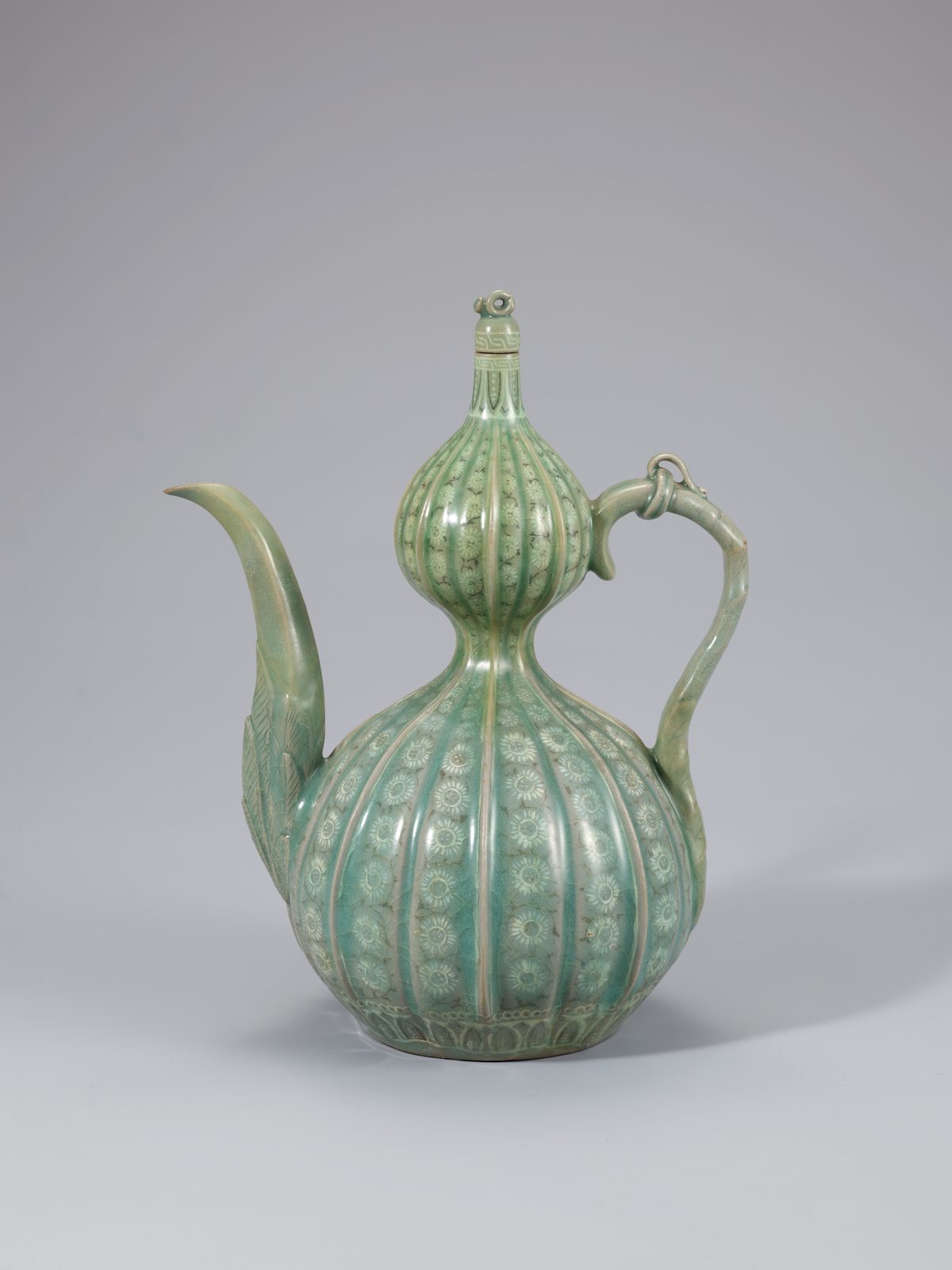
The Goryeo dynasty section changes the pace from sculptural silhouette to surface and light. A gourd-shaped celadon ewer of the 1200s carries rows of chrysanthemum motifs in white and black slip beneath a bluish-green glaze. The sanggam process required designs to be cut into the unfired clay, filled with contrasting slip, glazed and fired. The ornament seems suspended under the glossy surface rather than sitting on top of it, and the curved spout and handle make the vessel look poised to move.
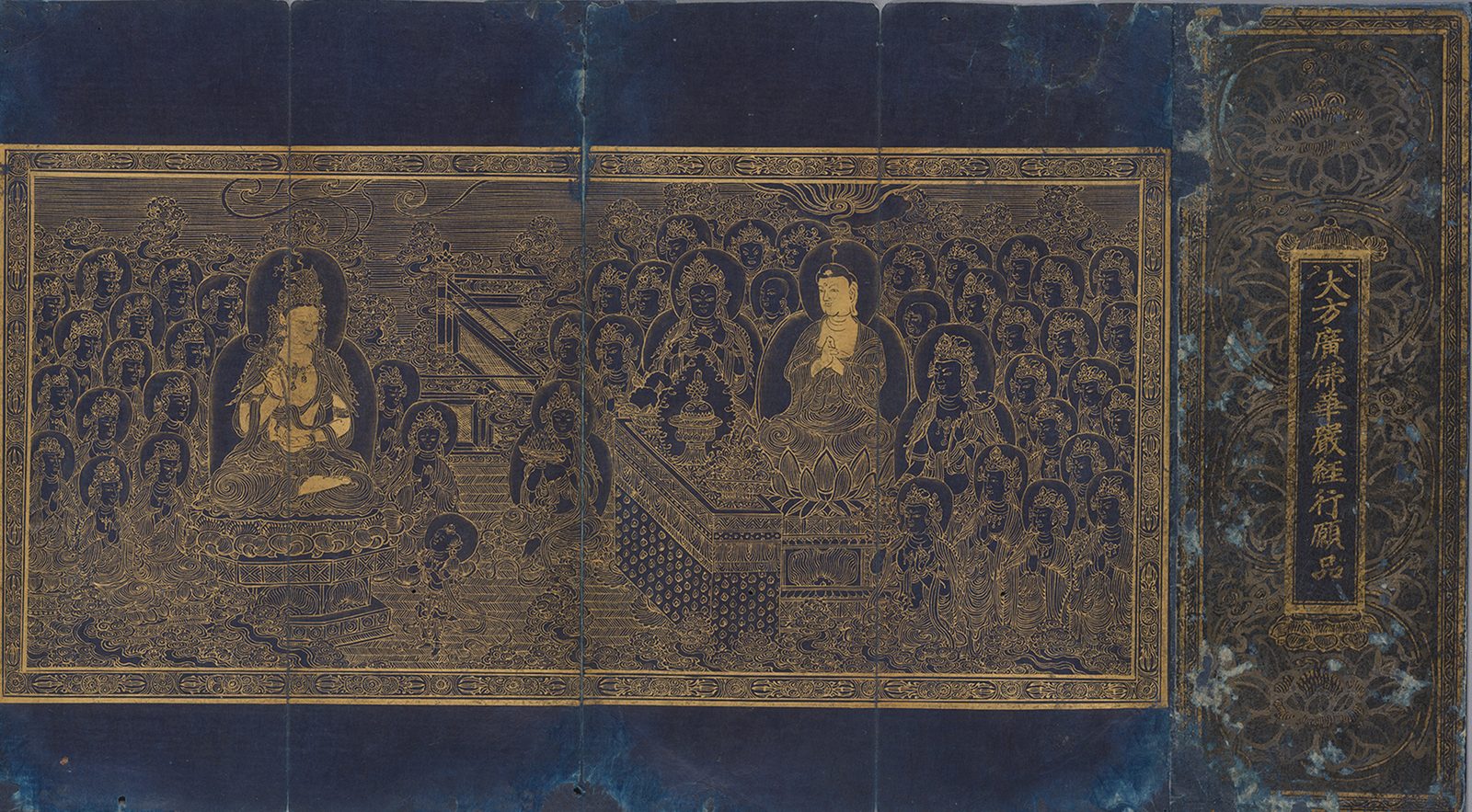
The devotional intensity of Goryeo art is clearest in The Practices and Vows of Samantabhadra, a chapter of the Flower Garland Sutra made around 1341–67. Gold and silver lines emerge from indigo-dyed paper with the precision of metal engraving. Copying or commissioning a sutra was itself an act of devotion; here the frontispiece brings Sudhana's search for enlightenment to its climax before the bodhisattva Samantabhadra, under the gaze of the Cosmic Buddha Vairocana.
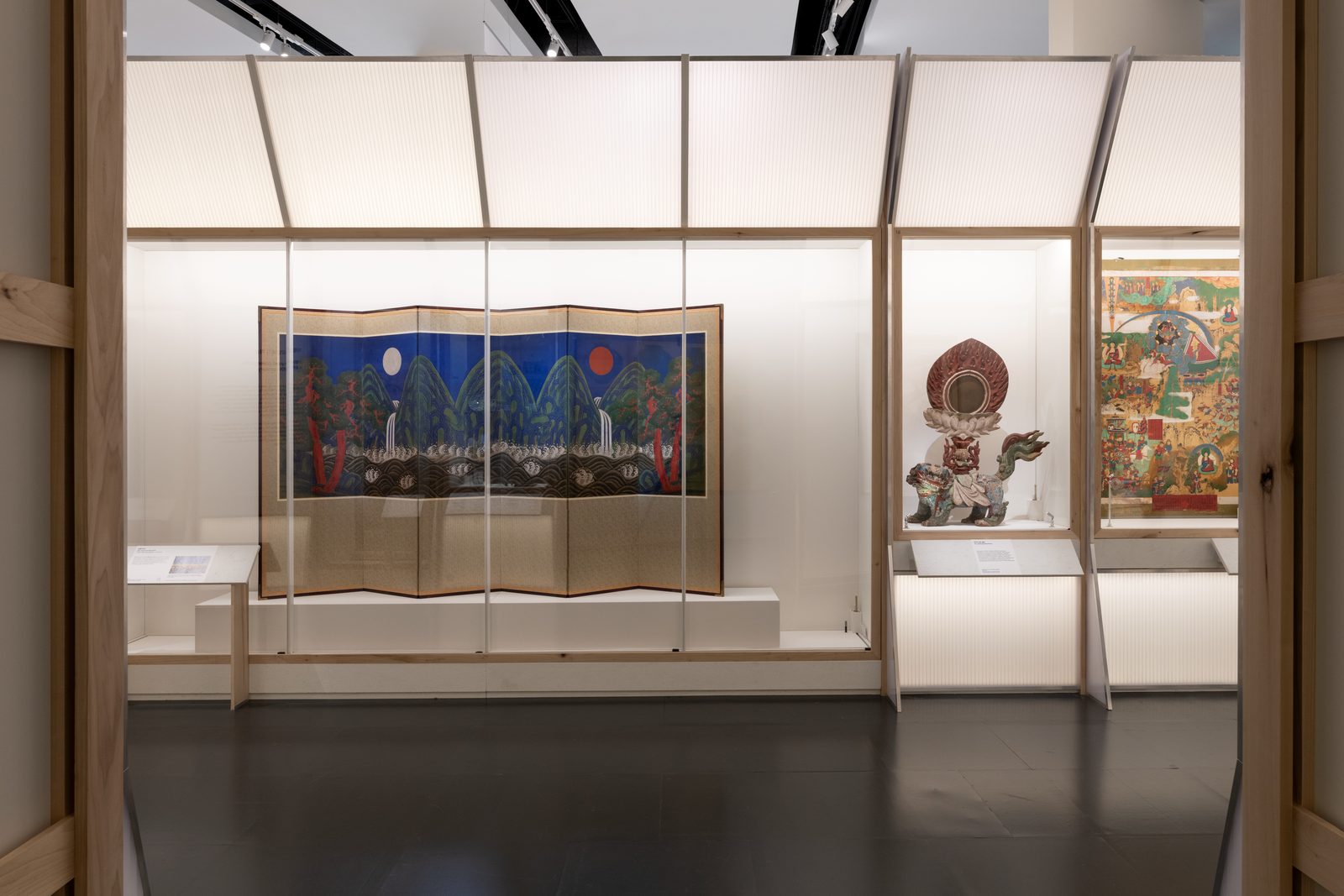
In the Joseon galleries, the six-panel Sun, Moon and Five Peaks screen turns landscape into an emblem of government. The red sun, pale moon, symmetrical mountains, waterfalls and dark waves form an ordered cosmos. Such imagery was reserved for the king and placed behind him on the throne or at ceremonies, so the ruler appeared not merely in front of a landscape but at the centre of a harmonised universe.
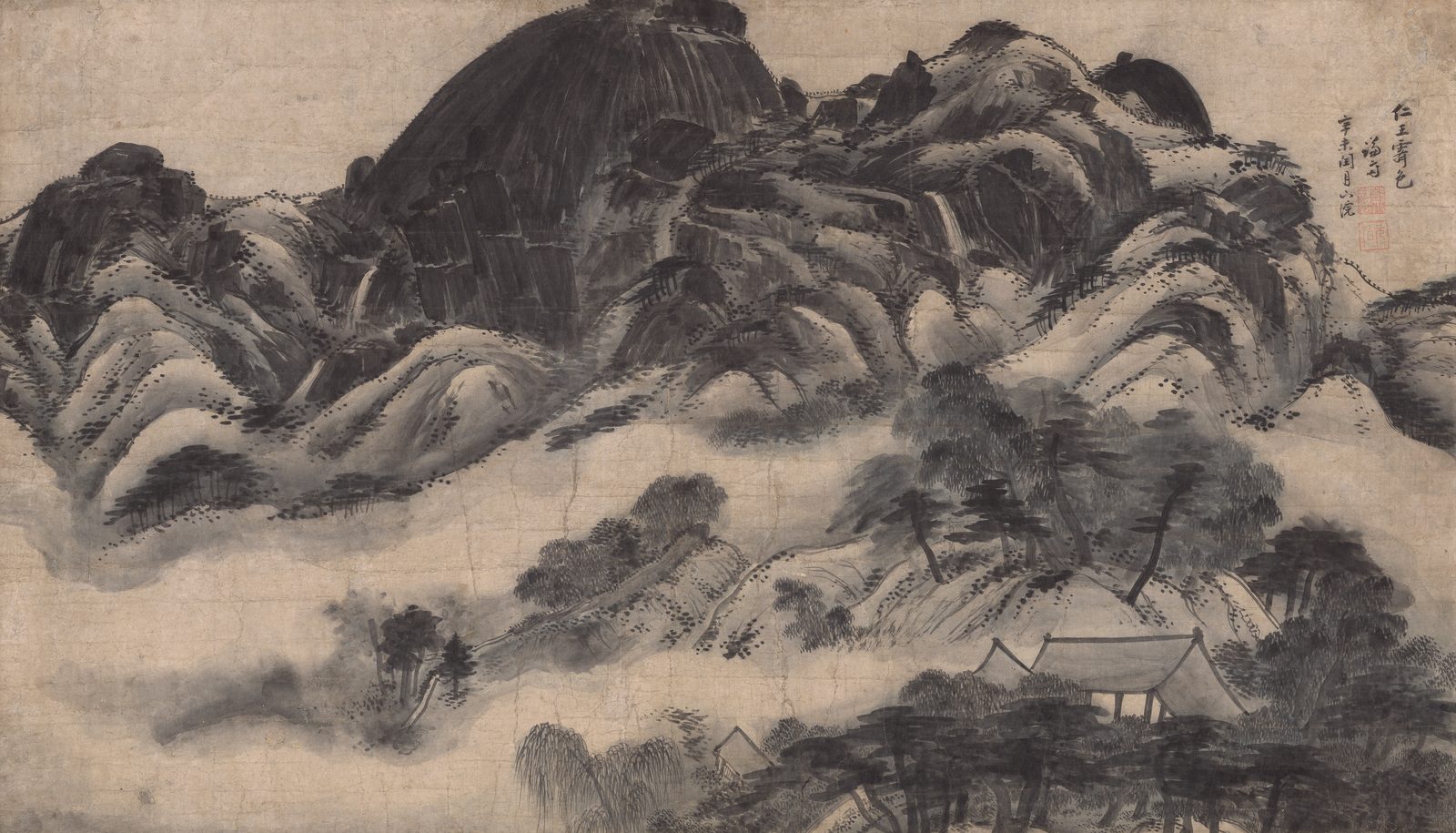
Jeong Seon's Clearing after Rain on Mount Inwang is quieter but more forceful. Painted in 1751 when the artist was 75, it replaces an imagined landscape with a mountain he knew from life in Seoul. Thick wet ink makes the Chimabawi rock face feel saturated after rain, while blank paper becomes rising mist. Jeong unusually recorded the title, his penname and the date on the sheet; the painting's scale, inscription and assured brushwork suggest how important it was to him.
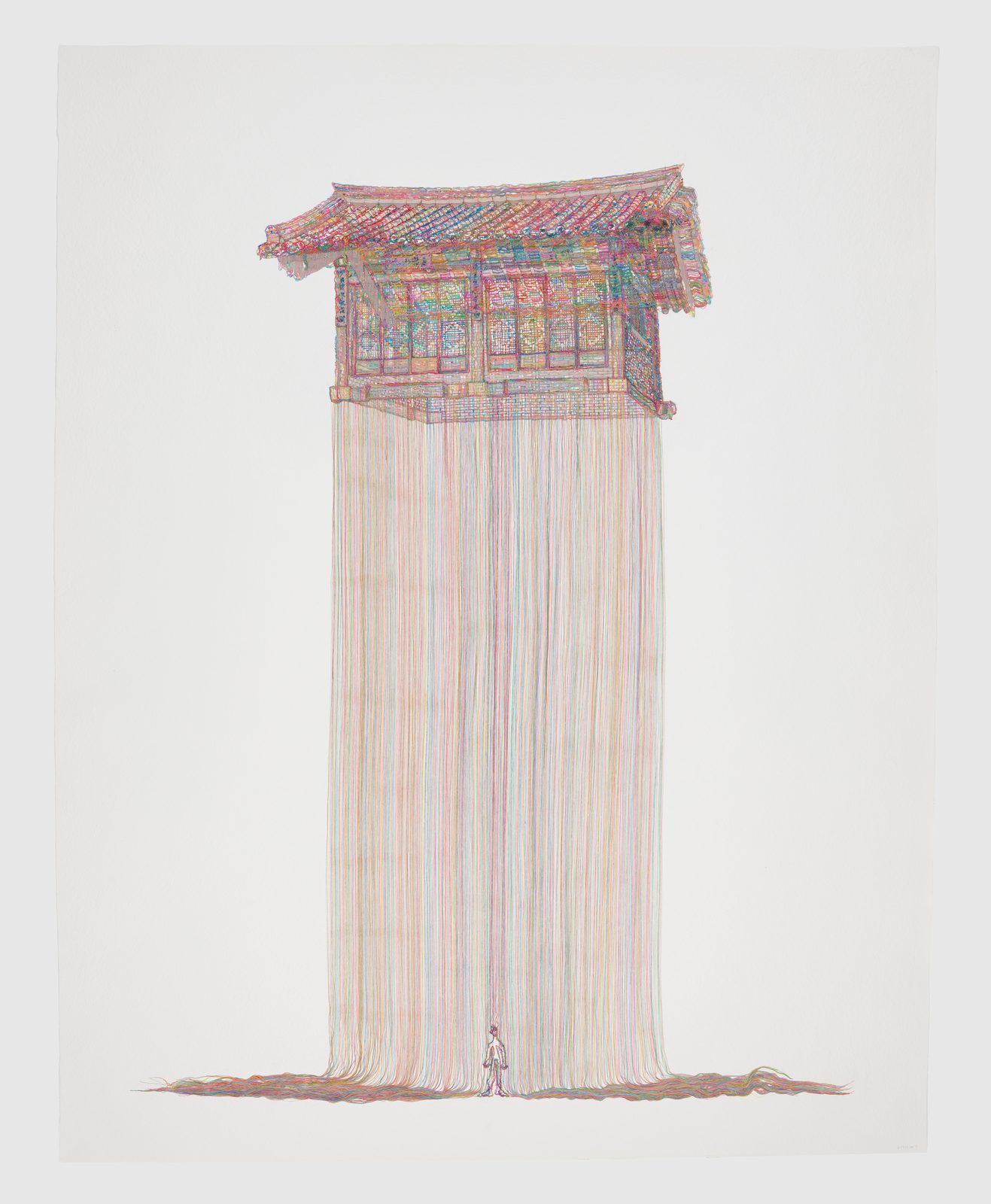
The final rooms make clear that Korean creativity did not stop at the threshold of modernity. In Suh Do Ho's 2019 Self-portrait, multicoloured thread is embedded in cotton paper to outline a traditional Korean house suspended above a tiny figure. The house reads at once as shelter, burden, memory and portable home. After the density of gold, glaze and ink in the earlier rooms, its near-white field gives the exhibition a resonant, open-ended conclusion.
Planning Your Visit: Dates, Tickets & Tips
Advance booking is strongly recommended, especially for weekends and Friday evenings. Allow about 75–90 minutes for the exhibition, plus time for the security and bag check at the entrance. The show is open during normal museum hours — daily 10.00–17.00 and until 20.30 on Fridays — but it will be closed on 1–2 December 2026.
The British Museum's official audio guide costs £4 and provides more than 45 minutes of commentary from actors Lee Byung-hun and Yerin Ha. International visitors should bring their own headphones. The chronological layout is easy to follow, but the number of unfamiliar dynasties and techniques means it is worth slowing down at the section panels rather than trying to see every case at the same pace.
The exhibition requires a separate ticket sold by the British Museum; admission to the permanent collection remains free and can be visited independently or with a private guide. The exhibition itself is visited on your own. If you plan to do both, book the timed exhibition slot first and leave roughly 30 minutes between it and any guided visit to account for queues, cloakroom stops and movement through the building.
Make a Day of It: Korea and the British Museum
The exhibition is ticketed and visited on your own. The rest of the British Museum is free, and with eight million objects it is easy to lose two hours without seeing the pieces that matter. A 2-hour private tour of the permanent collection, before or after your exhibition slot, gives you the highlights with an expert guide and no crowds.
See the British Museum Private TourWhy Visit Korea?
This is not simply a survey for specialists in East Asian art. It is a chance to watch one culture repeatedly absorb, refine and redirect ideas across two millennia: Buddhism becomes intimate gilt-bronze sculpture, celadon technology becomes a vehicle for almost weightless inlay, landscape painting turns toward the mountains of Seoul, and inherited architecture becomes a contemporary meditation on migration. The range is unusual, but the exhibition's real strength is coherence. Materials change from clay to gold, paper, oil and thread; the drive to make tradition speak to the present does not.
For visitors who know contemporary Korea mainly through cinema, television or music, the exhibition supplies a deeper visual grammar. Tigers, royal screens, scholar's objects and ideas of home are not presented as decorative origins for pop culture, but as living forms with histories of their own. That makes the show accessible without flattening it: familiar motifs may draw you in, while the objects reward the slower attention of a museum visit.
Practical Information
- Dates: 1 October 2026 – 31 January 2027; closed 1–2 December 2026
- Opening Hours: Daily 10.00–17.00; Fridays until 20.30
- Location: Room 35, the Joseph Hotung Great Court Gallery, The British Museum, Great Russell Street, London WC1B 3DG
- Tickets: Standard adult £20; off-peak adult £18; students, ages 16–18, jobseekers and disabled visitors from £16; under-16s and Members free; other concessions available. Tickets are sold by the British Museum — official ticket office
- Guided tours: Not available inside the exhibition. Our private tour of the British Museum covers the permanent collection and can be booked for the same day.
- How to Get There: Tottenham Court Road (5-minute walk), Holborn or Russell Square (7-minute walk), and Goodge Street (8-minute walk); several bus routes stop on New Oxford Street, Gower Street and Southampton Row.
Final Thoughts on Korea
Korea succeeds because its long chronology never feels like a textbook timeline. It lets materials carry the argument: pierced stoneware, luminous celadon, dense gold brushwork, rain-heavy ink and almost weightless thread each mark a different answer to the question of how a culture remembers and changes. Give the exhibition enough time to look closely, then use the permanent galleries — independently or through our British Museum tours — to place that story within a wider world.
Author: The London Museum Tours Team
This article was curated by the London Museum Tours team. We run private guided tours of the permanent collections of London's great museums, and we write about the city's temporary exhibitions to help you plan the perfect visit. We do not sell exhibition tickets: they are available only from the host museum.
Korea – FAQ
-
Where can I buy tickets for the Korea exhibition?
Tickets are sold only by the British Museum, online at the official ticket office or at the museum subject to availability. London Museum Tours does not sell exhibition tickets and cannot book them on your behalf.
-
Can I visit the Korea exhibition with a London Museum Tours guide?
No. Temporary exhibitions are visited independently with your own ticket; our private tours cover the permanent collection of the British Museum only. Many visitors combine the two on the same day: a 2-hour guided tour of the collection, then the exhibition, or the reverse.
-
How do I combine the Korea exhibition with a guided tour of the British Museum?
Book your exhibition slot first with the British Museum, then choose a tour time that ends about 30 minutes before it or starts 30 minutes after. Allow 75–90 minutes for the exhibition and 2 hours for the tour; entry to the permanent collection is free. See tour details and availability.
-
Do I need to book the Korea exhibition in advance?
The British Museum strongly recommends advance booking, particularly for weekends and Friday evenings. Same-day tickets may be available from the British Museum, but entry is subject to capacity and your preferred time may sell out.
-
How long should I allow for the Korea exhibition?
Allow about 75–90 minutes for a comfortable visit. Add extra time for the museum security check, and plan longer if you use the British Museum's 45-minute exhibition audio guide.
-
Is the Korea exhibition suitable for children?
Yes, especially for older children interested in animals, ceramics, painting or contemporary Korean culture. Under-16s enter free when booked with an accompanying adult through the British Museum, with a maximum of four under-16s per ticketed adult.
-
Can I take photographs inside the Korea exhibition?
The British Museum generally permits handheld photography for private, non-commercial use unless a notice says otherwise. Special exhibitions may impose additional restrictions, so follow the signs in Room 35; tripods, stands and selfie sticks are not permitted.
-
Is there an audio guide for the Korea exhibition?
Yes. The British Museum Audio app offers more than 45 minutes of exhibition commentary with actors Lee Byung-hun and Yerin Ha for £4. Bring your own headphones or buy earbuds at the museum.